Suvendu Adhikari West Bengal CM: A New Era Dawns Today, May 10, 2026
Can you imagine a political landscape in West Bengal that looks completely different from what we've known for years? Today, May 10, 2026, marks a monumental shift as Suvendu Adhikari takes the oath as the new Chief Minister of West Bengal. This isn't just another political transition; it's the culmination of a fierce electoral battle and the dawn of a new chapter for the state. For you, the citizens of West Bengal, this moment signifies potential changes in governance, policy, and the very direction your beloved state will take. We're diving deep into what this means, the journey that led here, and what the future might hold.
The Historic Oath-Taking Ceremony: A New Dawn for West Bengal Politics
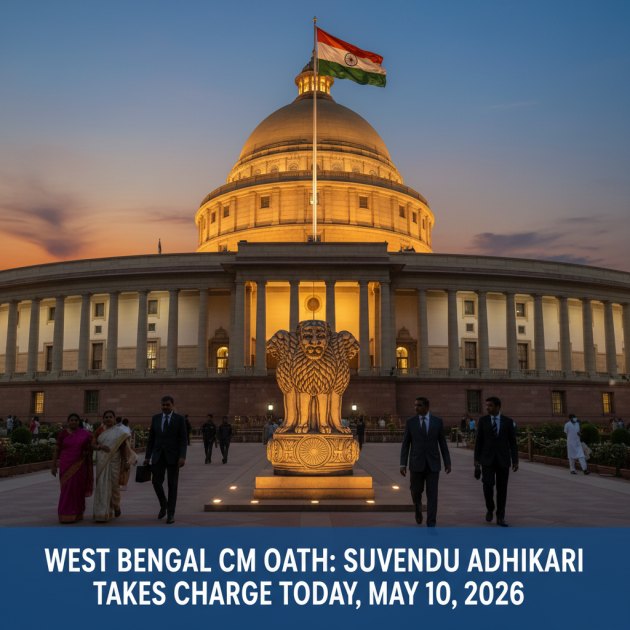
The air in Kolkata today, May 10, 2026, is thick with anticipation. The grand oath-taking ceremony of Suvendu Adhikari as the Chief Minister of West Bengal is not merely a formality; it's a powerful statement. After years of intense political rivalry, the Bharatiya Janata Party (BJP) has managed to secure a mandate, and Adhikari, a figure who has himself transitioned from one major party to another, stands at the helm. This event is being watched not just by the people of West Bengal but by the entire nation. What makes this moment particularly significant is the narrative it weaves – a story of political upheaval, strategic maneuvering, and the electorate's desire for change. You'll want to know the details of this pivotal moment, the dignitaries present, and the symbolic weight it carries. This ceremony is more than just a swearing-in; it's the official beginning of a new political era for West Bengal.
Who is Suvendu Adhikari? The Journey to the CM's Chair
Understanding the man who will now lead West Bengal is crucial. Suvendu Adhikari's political trajectory is one of the most talked-about in recent Indian politics. He began his career with the Trinamool Congress (TMC), holding significant ministerial portfolios and playing a key role in the party's electoral successes. However, a dramatic shift occurred when he joined the BJP, a move that sent shockwaves through the political establishment. His ability to connect with rural voters and his understanding of grassroots politics were instrumental in the BJP's increased vote share in the state. Today, as he takes the oath, it’s a testament to his political acumen and the strategic foresight of the BJP leadership. For you, this means a leader with a known background, but now operating under a different political banner and with different priorities.
The Significance of May 10, 2026
The date itself, May 10, 2026, will be etched in the annals of West Bengal's political history. It marks the day when the state's political narrative took a definitive turn. The choice of this specific date for the oath-taking is often imbued with symbolic meaning, reflecting the new government's aspirations and the political forces at play. You might be wondering about the symbolism, the auspicious timings, and the broader implications of this particular date being chosen. It's a day that signifies a break from the past and a bold step into the future, driven by the mandate of the people.
Practical Takeaway: Keep an eye on the initial policy announcements made by the new government. These will offer the first real clues about the direction Suvendu Adhikari plans to steer West Bengal.
The BJP's Electoral Triumph: A Deep Dive into West Bengal Politics
The victory of the BJP in West Bengal, leading to Suvendu Adhikari's appointment as Chief Minister, is a story that has captivated political analysts and the public alike. For years, West Bengal was seen as a bastion of regional parties, with the TMC holding sway. The BJP's consistent efforts to penetrate this market have finally borne fruit. This electoral triumph wasn't overnight; it was built on sustained campaigning, strategic alliances, and an effective articulation of their vision for the state. What most people miss is the meticulous groundwork laid over several election cycles, understanding voter grievances, and capitalizing on perceived weaknesses of the incumbent government. Your vote matters, and this outcome is a powerful reminder of that.
Factors Contributing to the BJP's Victory
Several key factors coalesced to bring about this historic win. The BJP's national narrative, coupled with its focus on specific local issues, resonated with a significant portion of the electorate. The perceived anti-incumbency sentiment against the TMC, coupled with allegations of corruption and political violence, also played a crucial role. Furthermore, the BJP successfully mobilized its cadre and leveraged its organizational strength to reach voters across the state. You might recall the high-octane campaigns, the rallies, and the debates that characterized the election period. Each of these elements contributed to the final tally. The shift in political allegiance by key leaders like Suvendu Adhikari also provided a significant boost.
The Electorate's Mandate: What Does it Mean for You?
The mandate given by the people of West Bengal is clear: a desire for change. This means that the new government, led by Suvendu Adhikari, has a significant responsibility to address the issues that led to this electoral verdict. For you, this could translate into changes in governance, economic policies, and social welfare programs. It's vital to understand that an electoral mandate is not just about changing faces; it's about expecting a different approach to problem-solving and governance. The BJP's promises during the campaign – be it regarding development, law and order, or job creation – will now be under scrutiny. You have the right to expect these promises to be fulfilled.
West Bengal Politics: A Shifting Landscape
The political landscape of West Bengal has been dynamic, but this election has fundamentally altered its contours. The rise of the BJP as a dominant force challenges the traditional bipolar politics that characterized the state for decades. This shift has implications for regional parties, national parties, and the overall political discourse. You are now part of a state where the political dynamics are evolving rapidly. This means new alliances, new rivalries, and potentially new policy directions. The influence of national issues versus regional aspirations will be a constant theme to watch.
Comparison: Previous Government vs. New Government Aspirations
| Aspect | Previous TMC Government (Perceived Focus) | New BJP Government (Campaign Promises/Likely Focus) |
|---|---|---|
| Governance | Regional focus, welfare schemes | Development, national integration, law & order |
| Economy | Industrial policy challenges, focus on services | Investment promotion, job creation, ease of doing business |
| Social Issues | Secularism, minority appeasement allegations | Nationalism, Hindu outreach, welfare for all sections |
| Political Style | Strong regional leadership, personality-driven | Ideology-driven, cadre-based organization |
Practical Takeaway: As a citizen, engage with the new government's policies. Understand how they align with the promises made and how they impact your daily life and community.
The Future Political Landscape: Challenges and Opportunities for Suvendu Adhikari
Assuming the mantle of Chief Minister is one thing; governing effectively is another. Suvendu Adhikari and the BJP government face a unique set of challenges and opportunities in West Bengal. The state has a rich history of political activism and a discerning electorate. Successfully navigating this complex environment will require a delicate balance of assertiveness and inclusivity. For you, this means understanding the hurdles the new government must overcome and the potential benefits that could arise from their tenure.
Governing West Bengal: Key Priorities
What will be the immediate priorities for the new administration? Based on campaign rhetoric and the BJP's national agenda, key areas are likely to include boosting economic growth, improving law and order, and addressing unemployment. You'll want to see tangible progress in these domains. The government will also need to manage inter-state relations, particularly with neighboring states and the central government, which will be crucial for development initiatives. The focus might shift towards attracting more central government schemes and ensuring their efficient implementation across the state.
Challenges Ahead: From Opposition to Implementation
The road ahead is certainly not without its bumps. The TMC, though out of power, will likely remain a formidable opposition, scrutinizing every move of the new government. Political polarization, a hallmark of recent West Bengal elections, could continue to pose a challenge, making consensus-building difficult. Furthermore, translating electoral promises into concrete policies and ensuring their effective implementation on the ground will be a significant test of administrative capability. You might face initial disruptions as new policies are rolled out, but the long-term goal is improvement.
Opportunities for Growth and Development
Despite the challenges, the new government also has significant opportunities. A fresh mandate can provide the impetus for bold reforms. West Bengal has immense potential in sectors like tourism, manufacturing, and IT. A stable government, backed by a strong national party, could attract significant investment. You could see new industries setting up shop, creating jobs and boosting the state's economy. The focus on development could lead to improved infrastructure, better connectivity, and enhanced quality of life for many. The central government's support, often more forthcoming for BJP-led state governments, could also be a game-changer.
Real-World Example: Consider the development of the Sundarbans region. A focused effort by the new government, perhaps in collaboration with central agencies, could lead to significant investments in eco-tourism, disaster management, and livelihood projects for the local communities, addressing both environmental concerns and economic needs.
Practical Takeaway: Stay informed about the government's performance on key economic and developmental indicators. Your awareness is crucial for holding them accountable.
The Role of Suvendu Adhikari's Leadership Style
The personality and leadership style of Suvendu Adhikari will undoubtedly shape the functioning of the new government. Known for his assertive approach and strong stance, his leadership will be closely watched. How he balances firmness with the need for consensus, and how he engages with different sections of society, will be critical for his success. For you, understanding his leadership style is key to anticipating policy decisions and the overall political climate.
Assertiveness and Diplomacy
Adhikari's political journey suggests a leader who is not afraid to take on challenges. As CM, this assertiveness will be needed to push through reforms and tackle pressing issues. However, effective governance also requires diplomacy – building bridges with opposition parties, engaging with civil society, and maintaining a harmonious relationship with the central government. The challenge lies in finding the right equilibrium. You'll want to see a leader who is decisive yet inclusive, firm yet fair.
Connecting with the People
A leader's connection with the masses is often a deciding factor in their popularity and effectiveness. Suvendu Adhikari has demonstrated an ability to connect with voters at the grassroots level. As Chief Minister, maintaining and strengthening this connection will be vital. This means being accessible, listening to public grievances, and actively participating in public life across the state. You expect your leaders to be visible and responsive. His ability to do so consistently will define his tenure.
Administrative Acumen
Beyond political charisma, effective administration is paramount. Adhikari will need to build a strong team, delegate responsibilities effectively, and ensure that the bureaucracy functions efficiently. His past experience as a minister will be valuable, but leading an entire state government presents a different scale of challenge. You'll be looking for efficient delivery of services and transparent governance. The success of his administration will hinge on his ability to manage the complex machinery of the state government.
Practical Takeaway: Observe how Suvendu Adhikari interacts with the opposition and civil society. This will give you insights into his approach to governance and democratic dialogue.
Understanding West Bengal's Political Evolution: A Broader Perspective
The current political developments in West Bengal are not isolated events but part of a larger, evolving narrative. Understanding this evolution gives you a clearer picture of why things are happening the way they are. For decades, West Bengal's politics was characterized by strong ideological currents and a vibrant civil society. The rise of regional parties and, more recently, the consolidation of national parties, signifies a shift in these dynamics. What most people miss is the underlying socio-economic factors that influence these political transformations.
From Left Front to Mamata Banerjee's TMC
For 34 years, West Bengal was governed by the Left Front, a unique period in Indian political history. This era ended with the rise of Mamata Banerjee and the TMC, promising 'poriborton' (change). The TMC's journey from a leading opposition force to the ruling party, and now its position as the main opposition, reflects the state's dynamic political arena. You've witnessed these shifts firsthand, and they highlight the electorate's ability to bring about significant political change when dissatisfied.
The BJP's Gradual Ascent
The BJP's emergence as a major political force in West Bengal has been a gradual process. Initially a fringe player, the party has systematically increased its vote share and seat tally over successive elections. This rise is attributed to its ability to tap into national sentiments, its organizational machinery, and its effective utilization of political narratives. The recent mandate is the culmination of this sustained effort. Your engagement with political news and election analysis helps you understand these gradual shifts.
What Lies Ahead for West Bengal?
The future of West Bengal politics is likely to be characterized by a strong bipolar contest between the BJP and the TMC, with other regional players vying for space. The focus will increasingly be on governance, economic development, and the welfare of the people. The success of the Suvendu Adhikari government will be measured by its ability to deliver on its promises and address the aspirations of the state's diverse population. You are at the heart of this evolving political story, and your participation in the democratic process remains paramount.
Practical Takeaway: Follow political developments not just in West Bengal but nationally, as national political trends often influence regional outcomes.
Frequently Asked Questions (FAQ) about Suvendu Adhikari's CM Oath
-
What are the immediate challenges for Suvendu Adhikari as the new Chief Minister?
The immediate challenges include forming a stable cabinet, addressing law and order issues, managing the state's finances, and fulfilling key campaign promises such as job creation and attracting investment. He also needs to navigate the role of a strong opposition and ensure inclusive governance across the state.
-
How will Suvendu Adhikari's past political affiliations influence his tenure?
Adhikari's transition from the TMC to the BJP is a significant aspect of his political identity. While he brings valuable experience from his previous role, his tenure will be closely watched to see how he balances his current party's ideology with the need to govern a diverse state like West Bengal. His understanding of regional issues, honed during his time with the TMC, could be an asset, but he will now be expected to implement the BJP's national agenda.
-
What are the key economic promises made by the BJP during the election campaign?
The BJP's campaign often highlighted promises related to boosting industrial growth, creating employment opportunities, attracting foreign and domestic investment, and improving the ease of doing business in West Bengal. Specific focus areas might include sectors like manufacturing, tourism, and technology. You should look for concrete policy initiatives in these areas.
-
How might the relationship between the West Bengal government and the Central government change?
With the BJP now in power in West Bengal, it is expected that the relationship with the Central government will be more cooperative. This could lead to smoother implementation of centrally sponsored schemes and potentially greater financial and logistical support for state-level development projects. However, political dynamics can still lead to friction, so it remains a crucial area to monitor.
-
What is the significance of Suvendu Adhikari becoming the Chief Minister for West Bengal's political future?
His appointment signifies a major shift in West Bengal's political landscape, breaking decades of regional party dominance. It signals the consolidation of the BJP as a major political force in the state and could lead to a more nationalized political discourse. This transition offers both opportunities for new development paradigms and challenges in managing political diversity and historical regional identity.
Conclusion: Your Role in West Bengal's New Political Chapter
Today, May 10, 2026, marks a significant turning point for West Bengal. Suvendu Adhikari's oath as Chief Minister is the beginning of a new political journey for the state. This transition brings with it hopes for development, change, and a renewed sense of progress. For you, the citizens, this is an opportune moment to engage actively in the democratic process. Your vigilance, your participation, and your informed opinions are what will shape the future of West Bengal.
The challenges are real, and the opportunities are vast. It's up to the new government to harness these opportunities and overcome the hurdles. But it's also up to you to hold them accountable, to voice your concerns, and to contribute constructively to the state's progress. Stay informed, participate in civic discussions, and make your voice heard. This is your state, and its future is in your hands. Let's embrace this new chapter with optimism and a commitment to building a stronger, more prosperous West Bengal together.