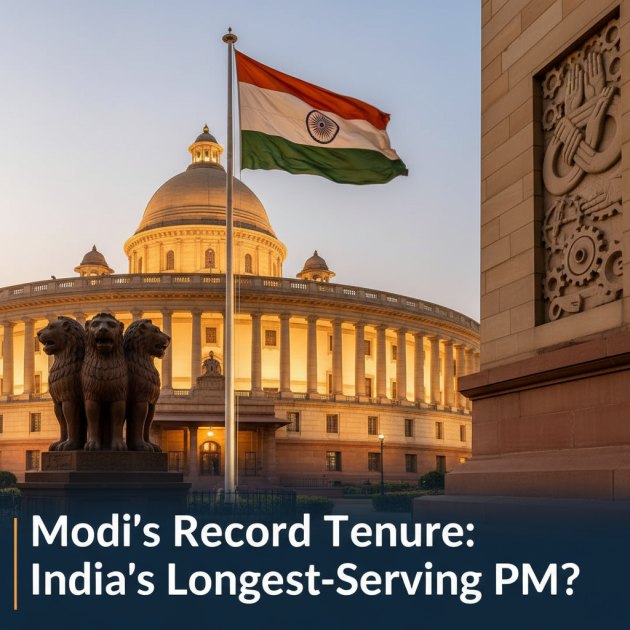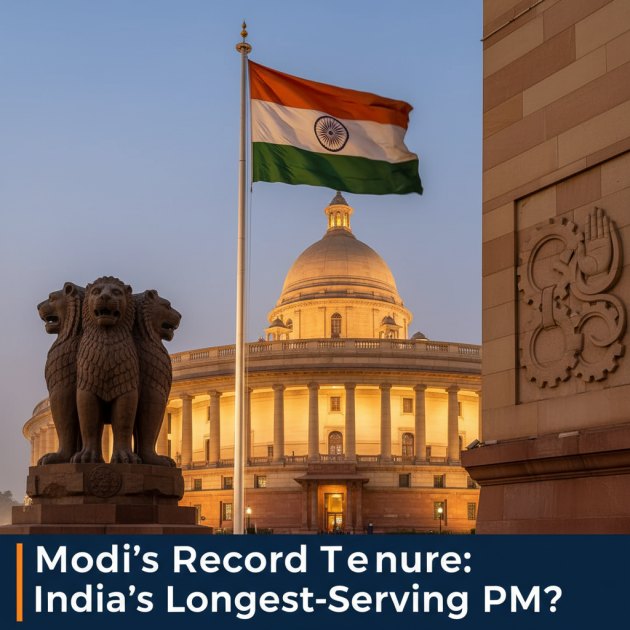
PM Modi's Record Tenure: India's Longest-Serving PM?
PM Modi's Record Tenure: India's Longest-Serving PM? A Deep Dive into 2026 Politics
Imagine this: a leader whose time in office stretches beyond the memories of many. As we stand on the cusp of 2026, a significant milestone looms large in Indian politics. Narendra Modi, our current Prime Minister, is on track to potentially become India's longest-serving Prime Minister. This isn't just a statistic; it's a reflection of shifting political landscapes, evolving voter sentiments, and the enduring impact of a leader who has reshaped governance. But what does this mean for you, for your future, and for the trajectory of India? Let's dive deep into the numbers, the history, and the implications of PM Modi's potentially record-breaking tenure.
The Numbers Game: How Long Has PM Modi Been in Power?
To understand the significance, we need to look at the facts. Narendra Modi first took office as Prime Minister on May 26, 2014. He then secured a decisive victory in the 2019 general elections, beginning his second term on May 30, 2019. As of early 2026, his continuous tenure would surpass the 10-year mark. To truly grasp the scale, let's compare this with some of India's most prominent past Prime Ministers.
Jawaharlal Nehru: The Architect of Modern India
Jawaharlal Nehru, India's first Prime Minister, served from August 15, 1947, until his death on May 27, 1964. That's an impressive 16 years and 286 days. His era laid the foundation for India's parliamentary democracy, non-alignment policy, and industrial development. His long tenure allowed him to deeply embed his vision into the nation's fabric.
Indira Gandhi: A Transformative Figure
Indira Gandhi served for a total of over 15 years, though not continuously. Her first term was from January 24, 1966, to March 24, 1977, and her second term ran from January 14, 1980, until her assassination on October 31, 1984. Her leadership was marked by significant policy shifts, including the Green Revolution and the bank nationalization, but also by periods of political turmoil.
Atal Bihari Vajpayee: The Diplomat and Reformer
Atal Bihari Vajpayee served for a cumulative period of just over 6 years. His longest continuous term was from March 19, 1998, to May 22, 2004. He is remembered for his diplomatic prowess, economic reforms, and the Pokhran-II nuclear tests.
The Modi Era: A Continuous Mandate
As of June 7, 2026, PM Modi will have completed 12 years and 1 month in office. If he continues to serve his current term, which concludes in 2024, and potentially secures another mandate in the upcoming elections, he could indeed surpass Nehru's record in the coming years. This sustained electoral success is a testament to his connect with a significant portion of the Indian electorate.
Takeaway: Understanding the historical context of prime ministerial tenures helps us appreciate the magnitude of PM Modi's current and potential future leadership span.
The Modi Phenomenon: What's Driving This Sustained Popularity?
It's easy to look at the numbers, but what’s behind this sustained electoral success? For you, the voter, understanding the drivers of political longevity is crucial. PM Modi's appeal is multifaceted, combining strong leadership perception, effective communication, and a focus on nationalistic pride.
The 'Strong Leader' Image
From his decisive actions in foreign policy to his government's approach to national security, Modi has cultivated an image of a strong, decisive leader. This resonates with many Indians who seek stability and a firm hand at the helm, especially in a complex global environment. Think about the surgical strikes or the abrogation of Article 370 – these were seen by his supporters as bold, decisive actions that fulfilled long-standing promises.
Welfare Schemes and Direct Benefit Transfers
Beyond the strongman image, Modi's government has heavily emphasized welfare schemes. Programs like the Pradhan Mantri Ujjwala Yojana (free LPG connections), Ayushman Bharat (health insurance), and direct benefit transfers (DBT) for various subsidies have reached millions of households. For many families, these schemes have tangible impacts on their daily lives, fostering a sense of gratitude and loyalty. For instance, a family in rural Uttar Pradesh finally having access to LPG cylinders means cleaner cooking and better health, a direct benefit they associate with the current government.
Nationalism and Cultural Connect
PM Modi has skillfully tapped into a sense of national pride and cultural identity. His emphasis on 'Make in India,' promoting indigenous industries, and his addresses often evoke a sense of 'Indian-ness' that connects deeply with a broad spectrum of the population. This resonates particularly with younger voters and those who feel a strong connection to India's heritage.
Effective Communication and Digital Reach
The BJP, under Modi's leadership, has mastered the art of communication, particularly through social media and digital platforms. Regular 'Mann Ki Baat' radio addresses, active social media engagement, and targeted digital campaigns ensure that the government's message reaches every corner of the country, connecting directly with citizens like you.
Takeaway: PM Modi's sustained popularity is a blend of perceived strong leadership, impactful welfare delivery, nationalistic appeal, and sophisticated communication strategies that resonate with a large segment of the Indian populace.
Implications for India's Policy and Governance
When a leader serves for an extended period, it has profound implications for the direction of the country. For you, this means continuity in certain policies and potentially a deeper embedding of the current government's ideology into the nation's institutions.
Policy Continuity and Long-Term Vision
A longer tenure allows for the implementation of long-term policies and reforms that might not show results immediately. Projects like the development of the national highway network, the push for renewable energy, or the digitalization of services often require years to mature. PM Modi's government has focused on several such ambitious projects, and a continued tenure would mean their sustained pursuit. For instance, the National Infrastructure Pipeline, envisioned to boost infrastructure spending, requires consistent political will over many years.
Strengthening of Institutions
With extended power comes the opportunity to shape institutions. This can lead to greater efficiency and alignment with the government's vision. However, it also raises questions about checks and balances and the diversity of thought within governance structures. For example, appointments to key bureaucratic and judicial positions can reflect the ruling party's priorities over time.
Economic Reforms and Growth Trajectory
Modi's government has pursued a path of economic liberalization, focusing on ease of doing business, digitalization of the economy (like UPI payments, which you likely use daily), and attracting foreign investment. A longer tenure could mean a more entrenched approach to these economic policies, potentially leading to sustained growth if implemented effectively. Think about the GST rollout – a massive reform that, despite initial challenges, aims to create a unified national market. Its long-term success hinges on consistent policy support.
Foreign Policy and Global Standing
India's foreign policy has seen a more assertive stance under PM Modi, with increased engagement in global forums and a focus on strategic partnerships. A sustained tenure would likely mean a continuation of this approach, further solidifying India's position on the world stage. India's active role in the Quad, for instance, reflects this strategic realignment.
Takeaway: Extended leadership can offer policy stability and the potential for long-term developmental impact, but it also necessitates vigilance regarding institutional balance and democratic checks.
Historical Significance: A Place in India's Political Pantheon?
Becoming India's longest-serving Prime Minister isn't just about holding office; it's about leaving an indelible mark on history. What legacy will PM Modi's tenure leave behind?
Comparison with Global Leaders
When we talk about long-serving leaders, globally figures like Germany's Angela Merkel (16 years) or Singapore's Lee Kuan Yew (31 years) come to mind. While contexts differ vastly, the longevity of such leaders often correlates with periods of significant national transformation or stability. For India, a continued Modi tenure would place him in a similar bracket of leaders who have guided the nation through pivotal phases.
Shaping India's Narrative
PM Modi has undeniably shaped India's contemporary narrative, both domestically and internationally. His emphasis on India's potential, his focus on development, and his projection of a strong national identity have captured the imagination of many. Whether these shifts are viewed as progressive or controversial, their impact is undeniable. Think about the rebranding of India on the global stage, with a focus on its economic potential and democratic vibrancy.
The Test of Time and Legacy
History is the ultimate judge. While current popularity is a strong indicator, a leader's true legacy is often understood decades later. Will Modi's era be remembered for its economic reforms, its welfare delivery, its nationalistic fervor, or perhaps a combination of all? The true historical significance will unfold as India continues its developmental journey.
Takeaway: A long tenure invariably leads to a significant historical footprint, shaping national identity and policy direction for generations to come.
Challenges and Criticisms: The Other Side of the Coin
No leader's tenure is without its challenges and criticisms. For you, it's important to have a balanced perspective.
Economic Concerns
Despite growth, concerns about unemployment, inflation, and income inequality persist. Critics argue that the benefits of economic growth haven't always trickled down effectively to the common person. For example, while the stock market might reach new highs, many families still struggle with rising prices of essential goods.
Social and Political Polarization
Critics often point to an increase in social and political polarization during Modi's tenure. Debates around secularism, freedom of speech, and minority rights have become more prominent, leading to concerns about the fabric of India's diverse society. The handling of certain social issues or protests has drawn sharp criticism from various quarters.
Democratic Institutions and Dissent
Questions have been raised about the health of democratic institutions, including the judiciary, the media, and the Election Commission. Concerns about the shrinking space for dissent and the use of investigative agencies against political opponents are frequently voiced by critics.
Global Economic Headwinds
India, like all nations, is susceptible to global economic fluctuations. Geopolitical tensions, supply chain disruptions, and global inflation can impact domestic growth, posing significant challenges for any government, including PM Modi's.
Takeaway: A critical assessment of any government's performance requires acknowledging both achievements and the persistent challenges and criticisms it faces.
Looking Ahead: What Does 2026 and Beyond Hold?
As we look towards 2026 and beyond, the prospect of PM Modi becoming India's longest-serving Prime Minister is not just a political talking point; it's a potential reality that shapes your future.
The Political Landscape
The political landscape in India is dynamic. While the BJP has shown remarkable strength, the opposition is also working to consolidate its position. The outcome of future elections will be crucial in determining the length of any leader's tenure. For you, staying informed and participating in the democratic process is key.
Continuity or Change?
The question remains: will the electorate continue to place its faith in PM Modi, or will there be a call for change? This decision will be influenced by a myriad of factors, including economic performance, social harmony, and the effectiveness of alternative political narratives. Your vote will be a crucial part of this decision.
Your Role as a Citizen
As citizens, your engagement is paramount. Understanding the issues, holding leaders accountable, and participating in the democratic process ensures that India's governance remains responsive to the needs of its people. Whether you agree with the current leadership or not, your informed participation is what strengthens our democracy.
Takeaway: The future of leadership in India, including the possibility of PM Modi becoming the longest-serving PM, rests on the collective decisions of the electorate and the dynamic evolution of the political landscape.
Frequently Asked Questions (FAQ)
Q1: Who is currently the longest-serving Prime Minister of India?
A1: As of mid-2026, Jawaharlal Nehru holds the record for the longest continuous tenure as Prime Minister of India, serving from August 15, 1947, until his death on May 27, 1964, a total of over 16 years. PM Modi is on track to potentially surpass this record in the coming years.
Q2: What are the key achievements attributed to PM Modi's tenure so far?
A2: Key achievements often cited include the implementation of large-scale welfare schemes like Ujjwala Yojana and Ayushman Bharat, digitalization of services (e.g., UPI), infrastructure development (highways, railways), a more assertive foreign policy, and efforts to improve the ease of doing business. The impact and effectiveness of these are subjects of ongoing debate and analysis.
Q3: What are the main criticisms leveled against PM Modi's government?
A3: Main criticisms include concerns about rising unemployment, inflation, alleged social and political polarization, questions regarding the independence of democratic institutions, and criticisms related to handling of dissent and minority rights. Economic policies and their impact on different sections of society are also frequently debated.
Q4: How does PM Modi's political style differ from previous Prime Ministers?
A4: PM Modi is often characterized by his strong, decisive leadership image, direct communication style leveraging social media and mass rallies, and a focus on nationalistic pride. This contrasts with the more consensus-driven or ideological approaches of some previous leaders. His government's emphasis on welfare delivery through direct benefit transfers is also a significant feature.
Q5: What are the potential economic implications of a long-serving PM Modi government?
A5: A long tenure could provide policy stability, enabling the continuation of economic reforms like 'Make in India,' digitalization, and infrastructure development. This could potentially lead to sustained growth. However, challenges like managing inflation, creating jobs, and ensuring equitable distribution of wealth would remain critical. For you, this could mean continued opportunities in sectors benefiting from government focus, but also the need to manage rising living costs.
Conclusion: A Defining Chapter in India's Political Story
The possibility of PM Modi becoming India's longest-serving Prime Minister is more than just a headline; it signifies a potentially defining chapter in India's post-independence political history. His journey, marked by significant electoral victories and a distinct governance style, has already left a profound impact on the nation. As we navigate through 2026 and beyond, understanding the nuances of his tenure – its achievements, challenges, and implications – is crucial for every Indian citizen. Your informed perspective and active participation in the democratic process are what ultimately shape the nation's destiny. Let's continue to engage, question, and contribute to building a stronger, more inclusive India for all.