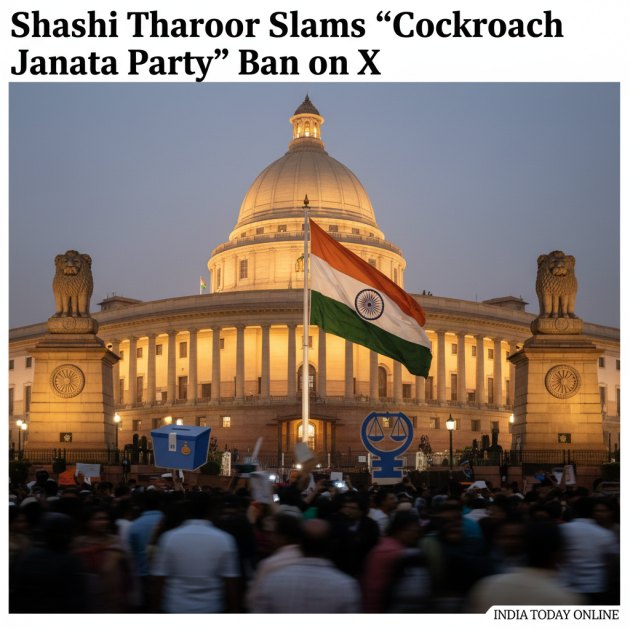
Shashi Tharoor Slams 'Cockroach Janata Party' Over X Ban in India
Shashi Tharoor's Fiery Retort: 'Cockroach Janata Party' and the X Ban Debate
Did you hear the latest political fireworks? In a move that's set tongues wagging across India, the ever-eloquent Shashi Tharoor has dropped a verbal bombshell, labelling a political entity the 'Cockroach Janata Party' and directly challenging a recent ban on the social media platform X (formerly Twitter). This isn't just another political spat; it's a crucial moment for free speech, digital rights, and the evolving landscape of India's vibrant democracy. As citizens, understanding these developments is paramount, as they directly impact how we access information and engage in public discourse. So, grab your chai, settle in, and let's dissect what this all means for you and me.
The 'Cockroach Janata Party' Moniker: A Political Jibe with Deep Roots
The phrase 'Cockroach Janata Party' might sound shocking, even humorous to some, but Shashi Tharoor, a seasoned parliamentarian and a master of wordplay, didn't use it lightly. This isn't a new insult; it's a term that has resurfaced in political discourse, often used to describe a political force perceived as resilient, ubiquitous, and perhaps, in the eyes of the critic, unwelcome or even parasitic. Tharoor's deployment of this label signals his deep dissatisfaction with the current political climate and, crucially, with specific policy decisions being enacted.
Decoding the Insult: What Does 'Cockroach' Imply?
When a politician like Tharoor uses such a strong metaphor, it's worth unpacking. The cockroach is known for its ability to survive extreme conditions, to multiply rapidly, and to be difficult to eradicate. In a political context, labelling a party this way suggests:
- Resilience and Persistence: The party is seen as incredibly difficult to defeat or dislodge, regardless of challenges.
- Ubiquity: It implies the party's presence is felt everywhere, perhaps through pervasive influence or widespread support.
- Negative Connotation: The term carries an inherent disgust, implying the party's growth or presence is undesirable, akin to a pest infestation.
Tharoor’s choice of words, while controversial, is a strategic attempt to frame the political opposition in a highly negative light, aiming to resonate with voters who might share similar sentiments. It’s a rhetorical tactic designed to provoke a strong emotional response rather than a reasoned debate, a common, albeit often divisive, strategy in modern Indian politics.
Your Takeaway: Political language can be a powerful tool. Understanding the intent behind such strong metaphors helps you critically evaluate the messages politicians are sending and the underlying sentiments they aim to tap into.
The X Ban Controversy: Silencing Voices or Curbing Misinformation?
The core of Tharoor's recent outburst stems from the alleged or actual ban of certain accounts or content on X in India. Platforms like X have become indispensable arenas for political debate, news dissemination, and public opinion formation. When access to these platforms, or parts of them, is restricted, it raises serious questions about freedom of expression and the role of government in regulating online speech.
What Exactly Happened on X?
While the specifics of any ban can be complex and often involve legal proceedings or government directives, the general concern is that such actions can stifle legitimate dissent and limit the free flow of information. Social media platforms, while not immune to misuse, serve as vital channels for citizens to voice their opinions, share news, and organize. Restricting these channels, especially during politically charged times, can be perceived as an attempt to control the narrative.
Tharoor’s criticism implies that the government, or entities aligned with it (hence the 'Cockroach Janata Party' jab), are using their influence to suppress critical voices on X. This could involve:
- Account Suspensions: Popular or critical accounts being temporarily or permanently banned.
- Content Removal: Specific posts or tweets being taken down.
- Algorithmic Suppression: Content being deprioritized, making it less visible.
The debate often boils down to the balance between curbing misinformation and hate speech versus preserving freedom of speech. While platforms have terms of service, the transparency and fairness of their enforcement, particularly under alleged governmental pressure, remain a significant concern for digital rights advocates.
The 'Cockroach Janata Party' Connection
Tharoor’s linking of the X ban to the 'Cockroach Janata Party' suggests he believes this political entity is instrumental in orchestrating or benefiting from the suppression of voices on the platform. He might be implying that the party uses its pervasive influence to ensure that criticism is silenced, allowing its own narrative to dominate, much like a resilient pest taking over an environment.
Real-World Scenario: Imagine you're trying to share news about a local issue or express a differing political opinion. If your posts are suddenly invisible, or your account suspended without clear explanation, it directly impacts your ability to participate in public discourse. This is the kind of scenario Tharoor is likely highlighting.
Your Takeaway: Stay informed about how social media platforms operate and how government policies might affect your online experience. Question restrictions and seek transparency.
Shashi Tharoor: A Champion of Digital Freedoms?
Shashi Tharoor has consistently positioned himself as a voice for liberal values and democratic principles. His background as a former UN diplomat and his articulate defence of civil liberties lend significant weight to his pronouncements. He has often spoken out against what he perceives as encroachments on fundamental rights, including freedom of speech and expression.
Tharoor's History with Digital Discourse
Throughout his career, Tharoor has embraced technology and social media as powerful tools for communication and citizen engagement. He was one of the early Indian politicians to effectively leverage platforms like Twitter. However, this embrace hasn't meant unconditional acceptance. He has also been a vocal critic of the misuse of these platforms for spreading hate speech and misinformation.
His current stance on the X ban, therefore, is consistent with his broader advocacy for an open internet and robust democratic debate. He likely sees the ban not as a measure to protect citizens, but as a tool to stifle opposition and control information, which goes against his core beliefs about a healthy democracy.
The Power of His Words
When a figure like Tharoor uses such provocative language, it’s not just a personal opinion; it’s a political statement designed to capture attention and frame a debate. The 'Cockroach Janata Party' jibe, amplified by the X ban controversy, forces a wider conversation about the nature of political power, accountability, and the media landscape in India.
Your Takeaway: Look at the track record of public figures. Tharoor's consistent advocacy for certain principles helps you understand the context and potential significance of his recent statements.
India's Evolving Digital Landscape and Free Speech Concerns
India has one of the largest internet user bases in the world, making social media platforms like X, Facebook, and WhatsApp incredibly influential. This digital revolution has democratized information but also presented new challenges related to misinformation, hate speech, and the potential for manipulation.
The Government's Stance and Regulations
The Indian government has expressed concerns about the spread of fake news and anti-national content on social media. This has led to the introduction of various regulations, including the IT Rules, 2021, aimed at increasing the accountability of social media intermediaries. While the stated goal is to ensure a safer and more responsible internet, critics argue that these regulations can be used to curb dissent and exert control over online speech.
The tension lies in finding the right balance. How can India protect its citizens from harmful online content without stifling legitimate expression and political debate? This is a question that remains at the forefront of discussions about digital governance in the country.
The Role of Social Media Platforms
Platforms like X are caught in a difficult position. They are expected to moderate content according to local laws and their own community guidelines, but they also face pressure from governments worldwide to remove certain content or provide user data. The decisions they make regarding content moderation and compliance with government requests have significant implications for free speech.
When accounts or content are banned on X, it raises questions about:
- The specific policy or law that was violated.
- The transparency of the decision-making process.
- Whether the ban was politically motivated.
Real-World Example: Consider how WhatsApp forwards containing rumours have sometimes led to real-world violence. This highlights the challenge of managing information in a digital age. However, consider also how social media has been instrumental in organizing relief efforts during natural disasters or raising awareness about social injustices.
Your Takeaway: Be aware of the digital laws and regulations in India and how they might affect your online activities. Advocate for transparency and fairness in content moderation.
Implications of the 'Cockroach Janata Party' Rhetoric and X Ban
Tharoor’s strong language and his focus on the X ban have several potential implications for the political and digital landscape of India.
Impact on Political Discourse
The use of such inflammatory language, while attention-grabbing, can also polarize the political discourse further. It shifts the focus from policy debates to personal attacks and metaphors, potentially making constructive dialogue more challenging. However, it also forces citizens to confront the underlying issues of power, control, and freedom of expression.
Digital Rights and Freedom of Speech
The controversy underscores the ongoing struggle to protect digital rights in India. If platforms are perceived to be unduly influenced by political pressure, it erodes trust and can lead to self-censorship among users. This is particularly concerning for journalists, activists, and ordinary citizens who rely on these platforms to voice their opinions and hold power accountable.
Public Perception and Electoral Politics
Rhetoric like Tharoor's, especially when targeted at a perceived ruling establishment, can resonate with segments of the electorate who feel their voices are being suppressed. It can become a rallying cry for opposition supporters and shape public perception of the government's approach to free speech. The effectiveness of such tactics in electoral politics is always a key factor to watch.
What Happens Next?
The situation is fluid. We might see further statements from political leaders, potential legal challenges regarding the X ban, and continued debate among the public and civil society organizations. It’s crucial for citizens to remain engaged and demand clarity and accountability from both the government and the social media platforms.
Your Takeaway: Your online voice matters. Understand the implications of censorship and advocate for an open and free internet. Support initiatives that promote digital literacy and rights.
Frequently Asked Questions (FAQs)
Conclusion: Your Digital Voice in a Changing India
Shashi Tharoor's sharp critique of the 'Cockroach Janata Party' and the alleged X ban is more than just political theatre. It’s a potent reminder of the ongoing battle for digital freedoms and the right to express oneself in India. As citizens, we are at a critical juncture. The way information flows, the platforms we use, and the rules that govern them directly impact our ability to participate in democracy and shape our society.
The implications of these debates are profound. They touch upon who controls the narrative, how dissent is treated, and whether the digital space remains a relatively open forum for ideas. Your engagement, your awareness, and your willingness to question and advocate for transparency are vital.
What's Next for You?
- Stay Informed: Follow reputable news sources that cover digital rights and Indian politics.
- Engage Responsibly: Use your online platforms to share informed opinions and counter misinformation.
- Support Digital Rights: Consider supporting organizations that champion online freedoms in India.
- Demand Transparency: Question platforms and authorities about content moderation policies and their enforcement.
The conversation sparked by Tharoor's remarks is one you cannot afford to ignore. Your digital voice is your power. Let's ensure it remains strong, free, and heard.