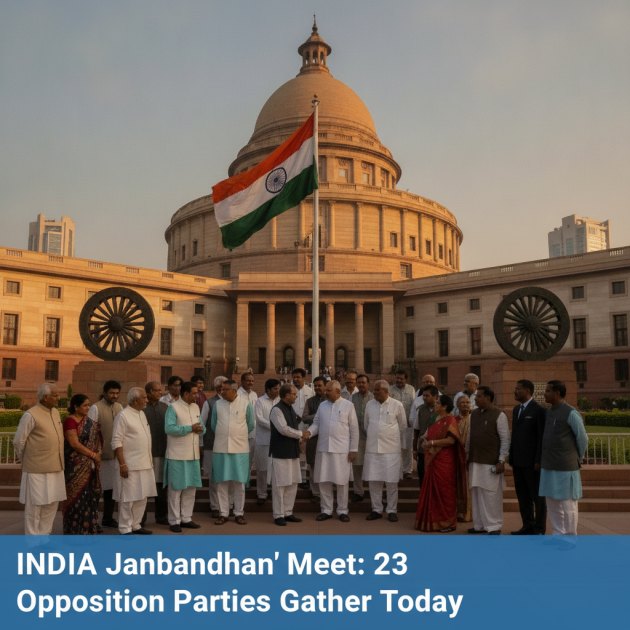
DMK's INDIA Bloc Meeting Boycott: Congress 'Betrayal' Sparks Alliance Crisis
DMK to Boycott INDIA Bloc Meeting: Congress 'Betrayal' Alleged - What It Means for You
Did you hear the latest political bombshell? The DMK, a key player in the INDIA alliance, has announced a boycott of the upcoming INDIA bloc meeting, citing 'betrayal' by the Congress. This isn't just another political spat; it's a seismic shift that could redefine the opposition's future. You might be wondering, what does this mean for the INDIA alliance, and more importantly, how does it affect your political landscape? Let's dive deep into the reasons behind this dramatic move and explore the potential ripple effects across India's complex political theatre.
The DMK's Stance: A Calculated Move or a Sign of Deepening Cracks?
The announcement from the Dravida Munnetra Kazhagam (DMK) to skip the crucial INDIA bloc meeting scheduled for 5 June 2026, has sent shockwaves through the political circles. Sources close to the DMK leadership indicate that the decision stems from a profound sense of disappointment and perceived 'betrayal' by the Indian National Congress. This isn't a sudden outburst; it's a culmination of several factors that have been brewing for a while. You see, political alliances are often built on mutual trust and a shared vision, and when that trust erodes, the foundation begins to crumble.
Unpacking the 'Betrayal' Allegations
What exactly constitutes this 'betrayal'? While the DMK has been somewhat guarded in its public statements, internal discussions suggest a few key areas of contention. Firstly, there are whispers about seat-sharing discussions for upcoming state and national elections. The DMK, a formidable force in Tamil Nadu, feels its concerns and demands are not being adequately addressed by the Congress. They believe that the Congress, perhaps overestimating its own strength or underestimating the DMK's influence, is pushing for terms that are not in the best interest of the alliance in the state. This is a common sticking point in any coalition; everyone wants a fair representation, and when one party feels short-changed, it breeds resentment.
Secondly, the DMK is reportedly unhappy with the Congress's perceived lack of aggressive campaigning and strategic coordination at the national level. They feel that the INDIA bloc, particularly the Congress, has not been able to present a united and compelling narrative against the ruling government. For a party like the DMK, which has a strong regional base and a history of assertive politics, this perceived lack of dynamism from its larger ally can be frustrating. You want your partners to be as invested and proactive as you are, right?
The DMK's leadership, particularly Chief Minister M.K. Stalin, is known for his strategic acumen. His decision to boycott the meeting is unlikely to be impulsive. It's a signal, a clear message to the Congress and other INDIA bloc partners that the DMK expects to be treated with greater respect and consideration. This move forces the other parties to acknowledge their concerns and potentially recalibrate their approach. It’s a high-stakes chess game, and the DMK has just made a bold move.
Practical Takeaway: When you're part of any group or alliance, whether political or professional, clear communication and mutual respect are paramount. If you feel your contributions or concerns are being overlooked, it's often better to address them proactively rather than letting resentment fester.
The Congress's Perspective: Navigating a Complex Alliance
From the Congress's standpoint, the situation is equally complex. As the largest party in the INDIA bloc, they often find themselves in the unenviable position of trying to balance the aspirations of multiple regional parties, each with its own set of demands and political compulsions. The Congress leadership is likely to view the DMK's boycott as a setback, especially at a time when the alliance is trying to consolidate its position against the ruling NDA.
Seat-Sharing Dilemmas and National Strategy
The issue of seat-sharing is a perennial headache for any multi-party coalition. In Tamil Nadu, the Congress's electoral performance in recent years has been modest, yet it remains a significant national party. The DMK, on the other hand, holds considerable sway in the state. Striking a balance that satisfies both parties, while also considering the needs of other smaller allies in Tamil Nadu, is a delicate act. The Congress might argue that they need a certain number of seats to maintain their national presence and to be a viable partner in the long run. They might also feel that the DMK, while powerful regionally, needs the INDIA bloc's national narrative to remain relevant beyond Tamil Nadu.
Furthermore, the Congress has been working on a broader national strategy for the INDIA bloc. They might believe that certain compromises are necessary to maintain the unity of the alliance, even if it means some internal friction. The party's leadership, under Rahul Gandhi, has been focused on projecting an image of a united opposition capable of challenging the BJP. A public spat with a key ally like the DMK could be seen as detrimental to this image. You can imagine the discussions happening behind closed doors – a mix of frustration, strategic recalculations, and attempts to mend fences.
The Congress's response to the DMK's boycott will be critical. Will they reach out immediately to placate the DMK? Will they stand firm on their position? Their actions will set the tone for how the INDIA bloc handles internal disagreements going forward. The good news is that the Congress has experience in coalition politics, but the current political climate presents unique challenges.
Practical Takeaway: In any negotiation or partnership, understanding the other party's constraints and objectives is crucial. Sometimes, a perceived stubbornness might be a result of their own internal pressures or strategic calculations.
What This Means for the INDIA Alliance's Future
The DMK's boycott of the INDIA bloc meeting is more than just a single event; it's a symptom of a larger challenge facing the alliance: maintaining cohesion among diverse regional aspirations and a national agenda. The INDIA bloc was formed with the primary objective of presenting a united front against the Bharatiya Janata Party (BJP) and its allies. However, the very diversity that gives the alliance its potential strength also makes it vulnerable to internal discord.
Will the INDIA Bloc Survive This Setback?
The survival of the INDIA bloc hinges on its ability to resolve such internal conflicts effectively. If the DMK's concerns are not addressed satisfactorily, it could embolden other regional parties to voice their own grievances, potentially leading to a domino effect. We've seen in the past how fractured opposition unity can benefit the ruling party. For the INDIA bloc to be a credible alternative, it needs to demonstrate that it can manage internal disagreements constructively.
The upcoming parliamentary elections are just around the corner, and a divided opposition is the last thing the INDIA bloc needs. The DMK is a significant force in Tamil Nadu, and its absence or lukewarm participation could have electoral consequences. The alliance needs every seat it can get to mount a serious challenge. You can bet that political strategists on both sides are closely watching how this situation unfolds.
One potential scenario is that this boycott serves as a wake-up call for the Congress and other INDIA bloc leaders. It might prompt them to engage in more serious dialogue and make genuine compromises. Another, more pessimistic, scenario is that this deepens the divisions, making future cooperation even more difficult. The alliance's ability to bounce back from this will be a true test of its resilience.
Real-World Example: Remember the UPA-I and UPA-II governments? They often faced challenges with allies like the DMK, NCP, and Trinamool Congress. However, they managed to keep the coalition together through intense negotiations and compromises. The INDIA bloc faces a similar, if not tougher, challenge in managing its disparate partners.
Practical Takeaway: For any large group or coalition to succeed, internal communication channels must remain open, and a willingness to compromise is essential. Ignoring persistent issues can have far-reaching negative consequences.
Impact on Tamil Nadu Politics and National Elections
The DMK's decision has immediate implications for the political landscape of Tamil Nadu and, by extension, the national electoral dynamics. Tamil Nadu is a state where regional parties often dictate terms, and the DMK is currently the dominant force. Its relationship with the Congress has historically been an alliance of convenience, driven by electoral calculations.
Regional Dynamics and National Ambitions
The DMK's current move suggests that it feels its regional interests are not being adequately protected within the INDIA bloc framework. If the rift widens, it could lead to a renegotiation of the alliance's terms in Tamil Nadu, or even a complete realignment. This could potentially benefit other political formations in the state. You might see other parties trying to capitalize on this apparent discord.
On a national level, the INDIA bloc's strength is often measured by the collective power of its constituents. The DMK's absence, even from a meeting, sends a signal of disunity. This could affect the morale of the alliance's supporters and provide an opening for the ruling NDA to highlight the opposition's perceived fragmentation. The Congress will need to work overtime to mend this relationship and reassure other INDIA bloc partners.
The DMK's strategy is likely to be focused on maximizing its electoral gains in Tamil Nadu. If they believe that a more assertive stance, even if it means distancing themselves from the Congress on certain occasions, will serve their purpose better, they will pursue it. This is classic regional party politics at play – prioritize your base, then look at the broader coalition.
Comparison Table: Past vs. Present Alliances
| Feature | UPA (Past) | INDIA Bloc (Present) |
|---|---|---|
| Key Partners | Congress, DMK, NCP, RJD, Left, etc. | Congress, DMK, SP, AAP, TMC, Left, etc. |
| Primary Goal | Prevent BJP's rise, governance | Unite against BJP, electoral challenge |
| Internal Dynamics | Frequent negotiations, occasional friction, but generally cohesive | Emerging challenges, significant regional party assertiveness, recent discord |
| Congress's Role | Dominant, but often reliant on allies for numbers | Leading force, but facing questions about its own electoral strength |
Practical Takeaway: Regional parties often have their own distinct political calculations. Understanding these regional dynamics is key to grasping the complexities of national alliances.
The Road Ahead: Can the INDIA Bloc Recover?
The immediate future of the INDIA bloc looks uncertain following the DMK's boycott. The ball is now in the court of the Congress and the other alliance partners to address the DMK's grievances. Will they offer concessions? Will they attempt a diplomatic outreach? Or will they let this disagreement fester?
Strategies for Reconciliation and Moving Forward
For reconciliation to occur, several steps are crucial. Firstly, a high-level delegation from the Congress, possibly including senior leaders, should engage in direct talks with the DMK leadership. This dialogue needs to be honest and address the core issues of trust and representation. Secondly, the INDIA bloc needs to establish clearer internal mechanisms for conflict resolution. This could involve regular consultations and a more formalized process for decision-making on sensitive issues like seat-sharing.
What most people miss is that these alliances are not just about political convenience; they are about building a shared vision and a common narrative. If the INDIA bloc can demonstrate that it has the capacity to listen to its partners and make necessary adjustments, it can recover from this setback. The DMK's action, while disruptive, could ultimately lead to a stronger, more cohesive alliance if handled correctly.
The alternative is a continued pattern of discord, which would significantly weaken the opposition's electoral prospects. You want your leaders to be united and focused, especially when facing a formidable opponent. The upcoming months will be crucial in determining whether the INDIA bloc can navigate these choppy waters and emerge as a united force.
Practical Takeaway: Proactive communication and a willingness to address grievances are the cornerstones of any successful long-term partnership. Ignoring problems only makes them bigger.
Frequently Asked Questions (FAQ)
-
Why is the DMK boycotting the INDIA bloc meeting?
The DMK is boycotting the meeting citing alleged 'betrayal' by the Congress. While specific details are not fully public, it is believed to be related to dissatisfaction over seat-sharing negotiations, perceived lack of coordination, and a feeling that their concerns are not being adequately addressed by the Congress within the INDIA alliance framework.
-
What does 'betrayal' mean in this political context?
In political alliances, 'betrayal' often refers to actions or inactions that are seen as undermining the interests of an ally. This can include reneging on promises, not consulting on key decisions, pursuing strategies that harm an ally's position, or perceived unfair treatment in negotiations, particularly regarding seat allocations.
-
How will this affect the INDIA bloc's chances in the upcoming elections?
A boycott by a significant constituent like the DMK can weaken the INDIA bloc. It signals disunity, potentially demoralizes supporters, and could lead to further fragmentation. If the issue is not resolved, it may impact the alliance's ability to present a united front and consolidate votes against the ruling NDA. However, it could also serve as a catalyst for better internal coordination if handled effectively.
-
What is the DMK's current political strength in Tamil Nadu?
The DMK is currently the ruling party in Tamil Nadu and holds significant political power. They have a strong base and have been successful in recent state and national elections held in the state. Their electoral performance makes them a crucial ally for any national coalition aiming to win seats in Tamil Nadu.
-
What are the potential outcomes of this situation?
Potential outcomes include: a swift resolution with concessions from the Congress, leading to renewed unity; a prolonged period of tension and negotiation, potentially weakening the alliance; or a complete breakdown of the alliance in Tamil Nadu, forcing the DMK to reconsider its national strategy. The specific outcome will depend on the negotiation skills and political will of the leaders involved.
Conclusion: A Crucial Juncture for the Opposition
The DMK's decision to boycott the INDIA bloc meeting is a stark reminder that political alliances are dynamic and often fraught with challenges. The alleged 'betrayal' by the Congress has brought these underlying tensions to the forefront, forcing a critical re-evaluation of the INDIA bloc's cohesion and future trajectory. For you, the voter, this unfolding drama highlights the complexities of opposition unity and its potential impact on the electoral outcomes. Can the INDIA bloc overcome this hurdle and present a united front, or will these internal rifts prove too deep to bridge? The coming days and weeks will be pivotal in shaping the answer to this question. The onus is now on the Congress and the DMK to engage in constructive dialogue and find a way forward, not just for their own parties, but for the broader vision of a strong, united opposition that many Indians are looking for. Your engagement with these political developments matters; stay informed and make your voice heard.