Delhi Heat: Why Weather Apps Show 42°C When Roads Burn at 65°C?
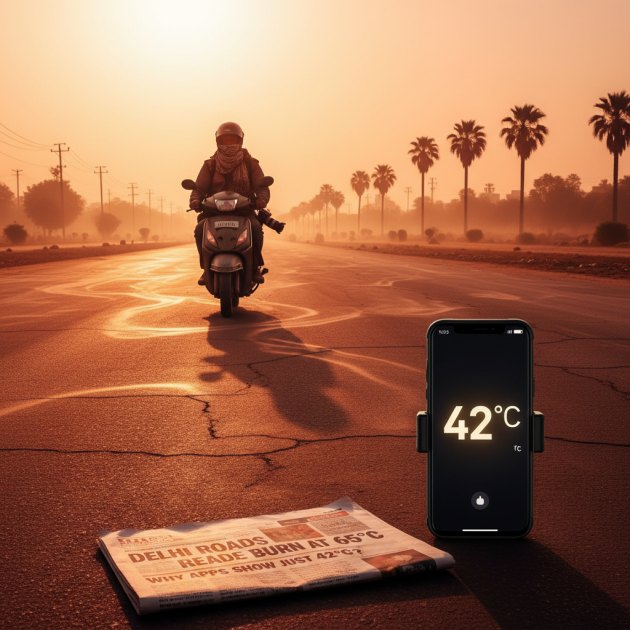
Delhi Roads Burn at 65°C: Why Apps Show Just 42°C?
New Delhi, 23 May 2026 – The mercury is soaring, and Delhi is in the grip of a brutal heatwave. You step outside, and the scorching sun feels like a physical blow. You glance at your phone, expecting a grim forecast, but the weather app proudly displays a relatively 'mild' 42°C. Mild? When the asphalt beneath your feet feels like it's about to melt? This stark discrepancy between what your weather app tells you and the fiery reality on Delhi roads is not just frustrating; it’s a crucial point of confusion for millions. Why is there such a massive difference, with some reports indicating ground temperatures reaching a staggering 65°C while apps hover around the low 40s? Let's dive deep into the science, the technology, and what this means for your health and safety during this intense Delhi heat.
The Fiery Truth: Understanding Surface vs. Air Temperature
It’s a question many of us ask during these sweltering days: "Why does my weather app say it's 42°C when it feels like 60°C?" The answer lies in a fundamental difference: what we typically measure is air temperature, not surface temperature. This is the most critical factor in understanding the Delhi heat and the seeming inaccuracy of our beloved weather apps.
Air Temperature: The Standard Measurement
Meteorologists have a standardized way of measuring air temperature. They use thermometers placed in a Stevenson screen – a white, slatted box designed to shield the thermometer from direct sunlight and radiation while allowing air to circulate freely. This screen is typically positioned about 1.5 to 2 meters (around 5-6 feet) above the ground. This height is crucial because it represents the ambient air temperature that directly affects human comfort and our overall climate. Weather apps and official reports rely on these standardized measurements to give us a general idea of the heat we'll experience.
Surface Temperature: The Unseen Inferno
Now, consider the roads, pavements, and rooftops in a city like Delhi. On a scorching sunny day, these dark surfaces absorb an enormous amount of solar radiation. Think about stepping barefoot on a tar road in the afternoon – it’s incredibly painful! This is because the surface temperature can skyrocket, far exceeding the air temperature. Reports of roads reaching 65°C are not uncommon during peak heatwaves. This is the temperature of the material itself, not the air around it. These extreme surface temperatures are what make walking outside feel unbearable and can pose serious risks.
Why the Big Gap? The Science of Heat Absorption
The difference arises from how different materials interact with solar energy. Dark, dense materials like asphalt and concrete have a low albedo, meaning they absorb a high percentage of incoming solar radiation and convert it into heat. They then radiate this heat back into the environment, significantly warming the air immediately above them. This localized warming effect is intense but doesn't necessarily reflect the overall air temperature measured at a standard height. So, while your app might show 42°C for the air, the road surface could easily be 20-25°C hotter.
Practical Takeaway: When you feel the intense heat, remember it's a combination of the air temperature (what your app shows) and the surface temperature (what you feel directly). Always factor in the ground's heat, especially when walking or parking your vehicle.
How Weather Apps Get Their Data: A Network of Sensors
You might be wondering, "Where do these weather apps actually get their data? Are they just guessing?" The answer is a complex network of data sources, ranging from sophisticated national weather stations to crowdsourced information. Understanding this data pipeline helps explain why you might see variations.
Official Meteorological Stations
The backbone of weather forecasting comes from official meteorological departments, like the India Meteorological Department (IMD). These stations are equipped with highly accurate instruments that measure various parameters, including air temperature, humidity, wind speed, and rainfall. Data from these stations is collected, processed, and used by weather agencies worldwide. Most reputable weather apps pull data from these official sources, ensuring a baseline level of accuracy for air temperature.
Crowdsourced Data and Personal Weather Stations
In recent years, many weather apps have incorporated data from personal weather stations (PWS) and even smartphone sensors. Millions of people globally have home weather stations that transmit local data. While this can offer hyper-local insights, the accuracy can vary significantly depending on the quality of the device, its placement (is it in direct sun? Is it near a heat-generating source?), and its calibration. Some apps might give more weight to these sources, leading to readings that can sometimes deviate from official, standardized measurements. This is particularly relevant in a densely populated city like Delhi, where numerous personal stations could be reporting.
Satellite and Radar Data
Beyond ground-based sensors, weather apps also utilize data from satellites and weather radar. Satellites provide broad coverage, tracking cloud patterns, temperature across large areas, and atmospheric conditions. Radar helps detect precipitation and storm systems. While invaluable for forecasting, this data is less precise for pinpointing exact ground-level temperatures in specific urban microclimates.
The Algorithm Factor
Finally, weather apps use complex algorithms to process all this raw data, interpolate it, and present it in an easily understandable format. These algorithms aim to provide the most likely temperature for your location. However, they are primarily focused on the standard air temperature measurement, not the extreme surface temperatures that can occur in urban environments.
Practical Takeaway: Your weather app primarily uses standardized air temperature data. For hyper-local or surface temperature insights, you might need to look at specialized sources or rely on your own sensory experience.
Urban Heat Island Effect: Delhi's Concrete Jungle Problem
The phenomenon of Delhi's roads feeling much hotter than the air temperature is amplified by something called the Urban Heat Island (UHI) effect. This is a well-documented environmental issue that significantly impacts cities, and Delhi is a prime example.
What is the Urban Heat Island Effect?
The UHI effect describes how urban areas experience significantly warmer temperatures than their surrounding rural areas. This difference is most pronounced at night but is also a major factor during the day, especially in peak summer. Cities are essentially 'heat islands' because of:
- Materials: As we discussed, concrete, asphalt, and buildings absorb and retain more solar heat than natural landscapes with vegetation and soil.
- Lack of Vegetation: Trees and green spaces provide shade and cool the environment through evapotranspiration (water evaporating from leaves). Cities often have less of these natural cooling elements.
- Waste Heat: Human activities like running air conditioners, vehicles, and industrial processes generate additional heat, further warming the urban environment.
- Urban Geometry: Tall buildings can trap heat and reduce wind flow, creating pockets of even warmer air.
Delhi's Specific Challenges
Delhi, with its vast expanses of concrete, dense population, heavy traffic, and limited green cover in many areas, is particularly susceptible to the UHI effect. During a heatwave, the UHI effect exacerbates the already high temperatures. The heat absorbed by the city's infrastructure during the day is released slowly, keeping temperatures elevated even after sunset. This means that even when the official air temperature drops slightly, the 'felt' temperature, especially on surfaces, remains extremely high. The 65°C readings on roads are a direct consequence of the UHI effect layering on top of a regional heatwave.
The Real Impact on Your Daily Life
The UHI effect doesn't just make your commute uncomfortable; it has serious health implications. It increases the risk of heatstroke, dehydration, and respiratory problems. It also puts a strain on energy grids as demand for air conditioning surges, leading to potential power outages – a common problem during Delhi summers.
Practical Takeaway: Be aware that the 'official' temperature is only part of the story in Delhi. The UHI effect means your immediate surroundings can be significantly hotter, impacting your health and comfort.
Why Your Weather App Isn't Lying (But Isn't Telling the Whole Story Either)
It's easy to feel like your weather app is deliberately downplaying the heat, but that's usually not the case. The discrepancy arises from the app's purpose and the standardized methods it employs.
The Purpose of a Weather App
Weather apps are designed to provide a general overview of atmospheric conditions for planning daily activities. They aim to tell you about the air you'll be breathing, the temperature you'll feel when you step outside your car or building, and the likelihood of rain. They rely on data that is collected and reported using international standards to ensure comparability across different regions and countries. The 42°C reading on your app is the official, standardized air temperature for Delhi.
What Most People Miss: The 'Perceived Temperature'
What most people miss is the difference between 'air temperature' and 'perceived temperature' or 'apparent temperature'. Perceived temperature takes into account factors like humidity (which makes heat feel worse – the heat index) and wind (which can cool you down). However, even perceived temperature usually doesn't account for extreme ground surface temperatures. The intense heat radiating from the tarmac is a direct thermal load on your body that standard apps don't measure.
The 65°C Phenomenon: A Different Measurement
The much higher temperatures, like the 65°C on Delhi roads, are typically measured by infrared thermometers or sensors placed directly on the surface. These are not standard meteorological measurements but rather indicators of the thermal load on infrastructure and potentially dangerous conditions for anyone in direct contact with these surfaces. Think of it as a specialized measurement for a specific problem – in this case, the extreme heat experienced by surfaces in an urban environment.
Bridging the Gap with Local Knowledge
While apps provide a baseline, they can't capture the full nuance of a specific microclimate within a city, especially during extreme events like heatwaves. This is where local knowledge and experience become invaluable. You know which areas are shadier, which roads get hotter, and when the sun is most brutal.
Practical Takeaway: Trust your weather app for general air temperature, but supplement it with your own awareness of surface heat and local conditions, especially in urban areas.
Staying Safe in the Delhi Heat: Practical Tips for You
Knowing the difference between air and surface temperature is crucial, but what matters most is how you protect yourself and your loved ones during this intense Delhi heat. Here are some actionable tips:
Hydration is Key
- Drink Water Constantly: Don't wait until you feel thirsty. Sip water throughout the day. Carry a reusable water bottle.
- Electrolytes Matter: For excessive sweating, consider ORS (Oral Rehydration Solution), lemon water with salt and sugar (nimbu pani), or coconut water to replenish lost salts.
- Avoid Dehydrating Drinks: Steer clear of excessive caffeine, alcohol, and very sugary drinks, as they can contribute to dehydration.
Dress Smartly
- Light Colors, Loose Fit: Wear light-colored, loose-fitting cotton clothes. These reflect sunlight and allow air to circulate, keeping you cooler.
- Cover Up: Use umbrellas, hats, and sunglasses when outdoors to shield yourself from direct sunlight.
Protect Your Home
- Keep Curtains Drawn: During the hottest part of the day, keep curtains and blinds closed to block out direct sunlight.
- Ventilate Wisely: Open windows and doors in the early morning and late evening when the air is cooler.
- Stay on Lower Floors: If you have multiple floors, try to spend more time on lower levels, as heat rises.
Be Mindful of Surfaces
- Wear Footwear: Always wear shoes or sandals when walking outside, especially on roads, pavements, and playgrounds.
- Check Surfaces: Before letting children or pets play outside, check the temperature of surfaces like slides or sandpits.
Recognize Heat Illness Symptoms
Know the signs of heat exhaustion and heatstroke, which include dizziness, nausea, headache, rapid pulse, and confusion. If you or someone else shows these symptoms, move to a cool place, hydrate, and seek medical attention immediately.
Practical Takeaway: Proactive measures focusing on hydration, appropriate clothing, home environment, and awareness of surface heat are your best defense against the Delhi heatwave.
FAQ: Your Burning Questions About Delhi's Heat Answered
Q1: Why do some news reports mention 50°C or even 65°C for Delhi, while my app shows 42°C?
A: This is primarily because news reports might be referring to surface temperatures (like roads or rooftops) which can get extremely hot due to direct solar radiation absorption, especially in urban environments. Your weather app, however, typically shows the official air temperature measured at a standard height (around 1.5-2 meters) in a shaded, well-ventilated area. The difference can be as much as 20-25°C or more. The 65°C figure is a measurement of the surface, not the ambient air.
Q2: Can I trust my weather app at all during a heatwave?
A: Yes, you can trust your weather app for the general air temperature and forecasts. It provides a standardized measurement crucial for understanding the overall atmospheric conditions and planning your day. However, remember it doesn't account for the extreme heat radiating from surfaces like roads and pavements, nor the 'feels like' temperature influenced by humidity and wind in your specific micro-location. Always use your app's data in conjunction with your own sensory experience and awareness of your immediate surroundings.
Q3: How does the Urban Heat Island (UHI) effect specifically make Delhi hotter?
A: Delhi's UHI effect is significant due to its vast concrete infrastructure, limited green spaces, and heavy traffic. These dark surfaces absorb and trap solar heat, releasing it slowly. This process makes the city significantly warmer than surrounding rural areas. During a heatwave, the UHI effect amplifies the regional heat, leading to extreme surface temperatures and prolonged high temperatures even after sunset. This is why the tarmac feels like an oven, even if the air temperature is slightly lower.
Q4: Are there specific apps or websites that show surface temperature?
A: While most mainstream weather apps focus on air temperature, some specialized services or scientific research projects might provide surface temperature data, often derived from satellite imagery. However, this data might not be as readily available or user-friendly for the general public. For practical purposes, understanding that surfaces can be 20-25°C hotter than the air temperature shown on your app is often sufficient. You can also look for real-time temperature readings from specific locations if they are available, but these are less common.
Q5: What are the real dangers of walking on roads that are 65°C?
A: Walking barefoot on a surface heated to 65°C can cause severe burns to your feet within seconds. Even with footwear, prolonged contact or proximity can lead to heat stress. For vehicles, tires can be stressed, and internal cabin temperatures can rise rapidly, posing risks to occupants, especially children and pets left inside even for a short duration. The intense radiant heat also contributes to overall heat stress on the body.
Conclusion: Be Prepared, Stay Safe, and Beat the Delhi Heat
The scorching temperatures in Delhi, with roads potentially hitting a dangerous 65°C while apps show a seemingly more manageable 42°C, highlight a critical difference between measured air temperature and the felt reality on the ground. This is a complex interplay of atmospheric conditions, the intense Urban Heat Island effect, and the materials that make up our city. Your weather app remains a valuable tool for understanding the general air temperature, but it's essential to interpret this data with an awareness of the extreme surface heat and local conditions.
As Delhi continues to grapple with these intense heatwaves, knowledge is your first line of defense. By understanding why the temperatures feel so much higher than reported, you can take more informed precautions. Prioritize hydration, wear appropriate clothing, protect your home, and be extremely mindful of hot surfaces. Stay vigilant for signs of heat illness in yourself and others.
Your next step? Share this information with your family and friends. Let's collectively build a more heat-aware community in Delhi. Stay cool, stay hydrated, and stay safe!