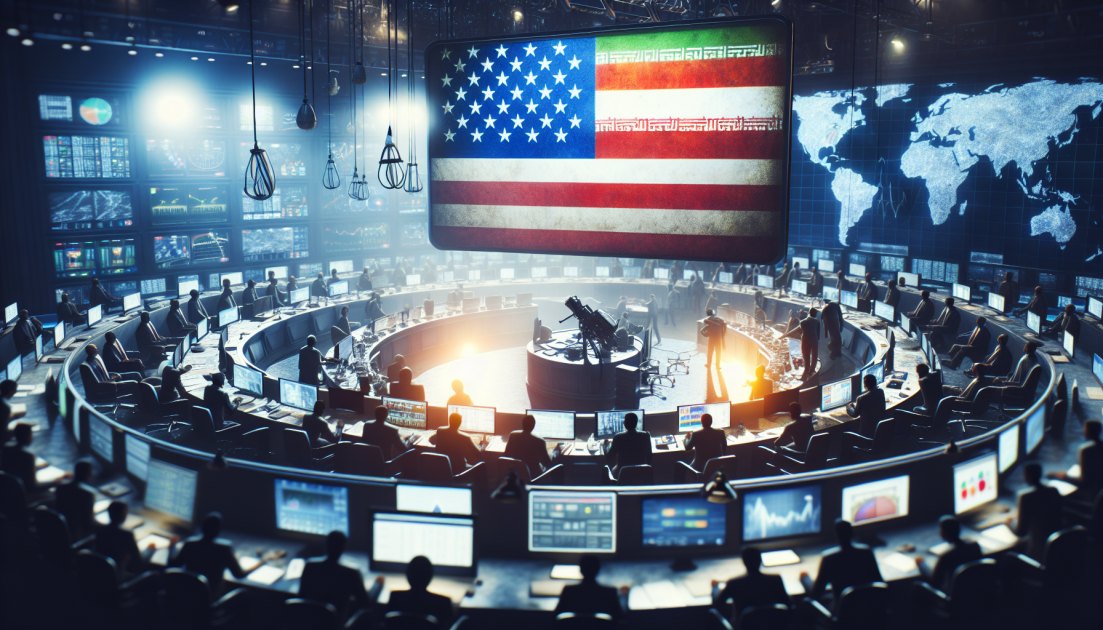
US-Iran Conflict 2026: Latest Updates & Direct Impact on India's Oil Prices – A Trend Duniya Analysis
As of April 15, 2026, the petrol prices in Delhi hover around ₹115 per litre, a stark reminder of how global tensions, particularly the escalating conflict between the US and Iran, directly pinch the common Indian's pocket. From Mumbai's daily commute to Chennai's logistics, the ripple effects of geopolitical strife in the Middle East are now a tangible reality for millions across our nation. This isn't just about abstract international relations; it's about the cost of your groceries, the fare for your auto-rickshaw, and the stability of your family budget.
For months, the simmering tensions in the Persian Gulf have been a focal point of international diplomacy. However, recent developments have unfortunately pushed the situation past the brink, leading to direct military engagements between the United States and Iran. This conflict, far from being a distant headline, has profound implications for India, a nation heavily reliant on imported crude oil. Understanding the nuances of this escalation and its economic fallout is crucial for every Indian citizen navigating these uncertain times.
Key Takeaways for the Indian Reader:
- The US-Iran conflict has directly threatened global oil supplies, primarily through potential disruptions in the Strait of Hormuz, driving crude oil prices to unprecedented levels.
- India, as the world's third-largest oil consumer and largely dependent on Middle Eastern imports, faces significant economic headwinds, including higher fuel prices, increased inflation, and potential fiscal strain.
- The Indian government is actively pursuing strategies like diversifying import sources, tapping strategic petroleum reserves, and strengthening diplomatic efforts to mitigate the adverse impacts on the domestic economy and consumer.
How US-Iran Tensions Escalated to Conflict in 2026
The path to open conflict between the United States and Iran has been a long and perilous one, marked by years of sanctions, proxy battles, and a persistent nuclear standoff. By early 2026, the situation reached a critical juncture following a series of maritime incidents in the Persian Gulf and renewed allegations of Iranian support for regional non-state actors targeting US interests. Despite intense diplomatic efforts by various global powers, including India, to de-escalate, a decisive turning point occurred when a major oil tanker, reportedly linked to a US ally, was struck in the Strait of Hormuz, leading to significant environmental and economic damage. While Iran denied direct responsibility, attributing it to regional instability, Washington pointed fingers squarely at Tehran, citing intelligence. This incident, combined with pre-existing grievances and a breakdown in communication channels, propelled both nations into direct military confrontation.
The Strait of Hormuz, a narrow waterway connecting the Persian Gulf to the open ocean, quickly became the primary theatre of naval operations. This strategic choke point, through which approximately 20% of the world's total petroleum liquids and a significant portion of India's crude oil imports pass daily, became a flashpoint. Both sides have deployed significant naval assets, leading to sporadic clashes and a palpable sense of unease across international shipping lanes. The fear of a complete closure of the Strait, even temporarily, has sent shockwaves through global energy markets, directly impacting the price of crude oil and subsequently, fuel prices in India.
The Strait of Hormuz: A Chokepoint for Global Oil and India's Lifeline
The Strait of Hormuz is not merely a geographical feature; it is the jugular vein of global energy trade. For India, its significance is amplified manifold. A substantial portion, nearly 60-65%, of India's crude oil requirements are met through imports from the Middle East, with a significant volume traversing this narrow passage. Any disruption here, whether due to direct military action, mining, or blockades, has immediate and severe consequences for India's energy security.
Since the onset of hostilities, insurance premiums for vessels transiting the Strait have skyrocketed, adding to the cost of crude oil. Shipping companies are increasingly wary, with some rerouting vessels via longer, more expensive routes around the Arabian Peninsula, further delaying deliveries and increasing freight charges. The global benchmark Brent crude, which was hovering around $85-90 a barrel in late 2025, has now surged past $120 a barrel, with analysts predicting it could climb even higher if the conflict intensifies or prolongs. This sharp escalation directly translates into higher import bills for Indian refiners and, inevitably, higher petrol and diesel prices at the pump for the common Indian consumer. The government's ability to absorb these shocks through excise duty adjustments is limited, given the existing fiscal pressures.
Direct Impact on India's Crude Oil Imports and Price Dynamics
The immediate and most visible impact of the US-Iran conflict on India is the surge in crude oil prices. As a net importer, India's economy is acutely sensitive to global energy market fluctuations. Every dollar increase in crude oil prices typically adds billions of rupees to India's import bill annually. This isn't just about the price of fuel; it cascades throughout the economy.
-
Fuel Prices: Petrol and diesel prices, already subject to state and central taxes, have seen consistent upward revisions. This directly impacts household budgets and increases operational costs for businesses, from transportation and manufacturing to agriculture.
-
Inflationary Pressures: Higher fuel costs translate to increased transportation expenses for goods, leading to higher prices for essential commodities, including food, vegetables, and consumer goods. The Reserve Bank of India (RBI) is closely monitoring these inflationary trends, and further interest rate hikes cannot be ruled out to curb rising prices, potentially impacting loan EMIs and economic growth.
-
Fiscal Strain: The government faces a difficult balancing act. Subsidising fuel prices to shield consumers would put immense pressure on the fiscal deficit, potentially impacting public spending on infrastructure and social welfare schemes. Alternatively, allowing market prices to prevail risks public discontent and economic slowdown.
-
Current Account Deficit: A higher crude oil import bill widens India's current account deficit, putting pressure on the Indian Rupee (₹) against the US Dollar ($). A weaker rupee makes imports even more expensive, creating a vicious cycle.
This situation demands a multi-pronged approach from the government, balancing economic stability with the immediate needs of its citizens.
India's Strategic Reserves and Diversification Efforts
Recognising its vulnerability to global oil price volatility, India has, over the past decade, proactively invested in building strategic petroleum reserves (SPRs). Managed by the Indian Strategic Petroleum Reserve Limited (ISPRL), these underground caverns currently hold millions of tonnes of crude oil, providing a buffer against short-term supply disruptions. While these reserves offer a crucial safety net, they are not a long-term solution to sustained high prices or prolonged supply blockages. Their primary purpose is to meet emergency needs for a few weeks, not to insulate the economy indefinitely.
In parallel, the Ministry of Petroleum and Natural Gas (MoPNG) has intensified efforts to diversify India's crude oil import basket. Traditionally heavily reliant on the Middle East, India has been actively seeking new suppliers from regions like Russia, the United States, Latin America, and Africa. This strategy aims to reduce over-dependence on any single region, thereby enhancing energy security. However, the sheer volume of India's demand means that the Middle East will remain a critical supplier for the foreseeable future. Diplomatic channels are also being leveraged to ensure uninterrupted supply from friendly nations in the Gulf, even amidst the regional turmoil. Furthermore, there's renewed impetus on accelerating domestic oil and gas exploration and production, though results from these efforts will take time to materialise.
Beyond Fuel: Broader Economic Ripples for India
The impact of the US-Iran conflict extends far beyond just fuel prices. India's economy is deeply intertwined with global trade and finance, and disruptions in a critical region like the Middle East create broader ripples:
-
Remittances: A significant portion of India's remittances comes from the Indian diaspora working in the Gulf Cooperation Council (GCC) countries. Any instability or economic downturn in these nations, driven by the conflict, could impact job security and, consequently, the flow of remittances back to India, affecting millions of families.
-
Trade Routes: While the primary concern is oil, other trade routes passing through or near the conflict zone could face disruptions. Increased shipping costs and delays for non-oil cargo could affect India's exports and imports of various goods, from agricultural products to manufactured items.
-
Investor Confidence: Global geopolitical instability often leads to a flight of capital from emerging markets like India to safer havens. Foreign institutional investors (FIIs) might pull out funds, putting pressure on the Indian stock market and the rupee. This could make it more expensive for Indian companies to raise capital internationally.
-
Diplomatic Challenges: India maintains strong diplomatic ties with both the US and Iran, as well as other key players in the Middle East. Navigating this complex geopolitical landscape requires astute diplomacy to protect its strategic interests, ensure the safety of its diaspora, and advocate for de-escalation.
The government's response will need to be agile, combining economic measures with robust diplomatic engagement to safeguard India's interests in a rapidly changing world order.
What to Verify Yourself: Official Sources for Updates
In times of geopolitical uncertainty, accurate information is paramount. Readers should always cross-reference news and official statements. Here are key sources to monitor:
- Ministry of External Affairs (MEA), Government of India: For official statements on India's foreign policy, diplomatic engagements, and advisories for Indian citizens abroad. (mea.gov.in)
- Ministry of Petroleum and Natural Gas (MoPNG), Government of India: For updates on India's energy policy, strategic reserves, and crude oil procurement strategies. (petroleum.nic.in)
- Reserve Bank of India (RBI): For economic data, inflation reports, and monetary policy statements that reflect the broader economic impact. (rbi.org.in)
- Reputable International News Agencies: For verified ground reports and analysis from the conflict zone (e.g., Reuters, Associated Press, BBC, The New York Times, Al Jazeera). Always be wary of unverified social media reports.
Disclaimer: This article provides general information and analysis based on current geopolitical understanding as of April 15, 2026. It should not be considered financial, investment, or professional advice. Readers are encouraged to consult with qualified experts for specific financial guidance.
Frequently Asked Questions (FAQ)
Q1: Why is the US-Iran conflict affecting petrol prices in India so much?
A1: The conflict has led to disruptions and increased risks in the Strait of Hormuz, a crucial global oil shipping lane. India imports a large percentage of its crude oil from the Middle East, much of which passes through this Strait. Increased global crude oil prices, higher shipping costs, and insurance premiums directly translate to higher petrol and diesel prices at the pump in India.
Q2: What is the Strait of Hormuz and why is it so important?
A2: The Strait of Hormuz is a narrow, strategically vital waterway connecting the Persian Gulf to the open ocean. It is a choke point through which approximately 20% of the world's total petroleum liquids and a significant portion of India's crude oil imports pass daily. Any disruption there impacts global oil supplies and prices significantly.
Q3: How is the Indian government trying to reduce the impact of rising oil prices?
A3: The Indian government is employing several strategies. These include leveraging its strategic petroleum reserves (SPRs) to meet emergency needs, actively diversifying its crude oil import sources beyond the Middle East to reduce reliance, and engaging in diplomatic efforts to ensure stable supplies from friendly nations.
Q4: Will the conflict affect other aspects of India's economy besides fuel prices?
A4: Yes, the impact extends beyond fuel. Higher crude oil prices lead to increased inflation across various goods and services, widen India's current account deficit, and put pressure on the Indian Rupee. There could also be impacts on remittances from the Indian diaspora in the Gulf and potentially on broader trade routes and investor confidence in India.
Q5: Where can I find official information about India's response to the conflict?
A5: For official updates, you should refer to the websites of the Ministry of External Affairs (mea.gov.in), the Ministry of Petroleum and Natural Gas (petroleum.nic.in), and the Reserve Bank of India (rbi.org.in). These portals provide government statements, policy updates, and economic reports relevant to the situation.