UPSC 2026: Your Ultimate Civil Services Exam Preparation Guide
UPSC 2026: Your Ultimate Civil Services Exam Preparation Guide
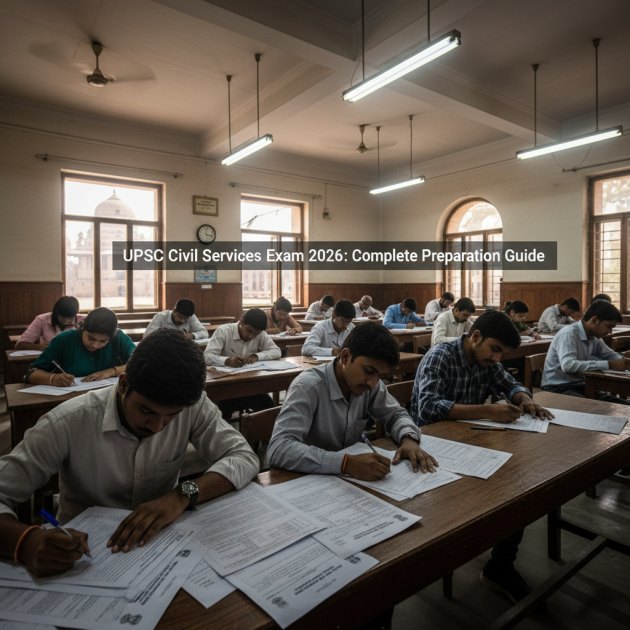
Dreaming of donning the uniform of an IAS officer, shaping policies, or leading the nation's development? The UPSC Civil Services Exam (CSE) is your gateway to the most coveted government jobs in India. With the UPSC 2026 notification likely to be released soon, now is the perfect time to chart your course. This isn't just another exam; it's a marathon that demands strategic planning, unwavering dedication, and a deep understanding of the Indian socio-political landscape. Whether you're a student in Delhi preparing for your first attempt or an NRI looking to contribute to India's growth from within, this comprehensive guide is designed to equip you with everything you need to conquer the Civil Services Exam 2026. We'll break down the syllabus, explore effective preparation strategies, highlight crucial dates, and address your most pressing questions. Get ready to transform your aspirations into reality!
Understanding the UPSC Civil Services Exam 2026
The Union Public Service Commission (UPSC) conducts the Civil Services Examination annually to recruit candidates for various prestigious services, including the Indian Administrative Service (IAS), Indian Foreign Service (IFS), Indian Police Service (IPS), and Indian Revenue Service (IRS), among others. The exam is known for its rigorous nature, testing candidates across a wide spectrum of knowledge and aptitude. For UPSC 2026, the journey begins much before the actual examination dates.
The Three Stages of the CSE
The CSE is broadly divided into three stages:
- Preliminary Examination (Prelims): This is a screening test comprising two objective-type papers (General Studies and Aptitude Test). Your performance here determines your eligibility for the Main Examination.
- Main Examination (Mains): This is a descriptive examination consisting of nine papers, including an essay, general studies papers, optional subject papers, and language papers. It tests your in-depth knowledge and analytical skills.
- Personality Test (Interview): The final stage is an interview conducted by the UPSC board to assess your suitability for a career in public service, evaluating your personality, leadership qualities, and awareness.
Key Services You Can Aspire For
The CSE opens doors to a multitude of esteemed government jobs India. Some of the top services include:
- Indian Administrative Service (IAS)
- Indian Foreign Service (IFS)
- Indian Police Service (IPS)
- Indian Revenue Service (IRS) - Income Tax & Customs
- Indian Audit and Accounts Service (IAAS)
- Indian Information Service (IIS)
- Indian Railways Personnel Service (IRPS)
Practical Takeaway: Familiarize yourself thoroughly with the structure and stages of the CSE. Knowing the battlefield is the first step to victory.
UPSC 2026 Syllabus: A Deep Dive
A clear understanding of the UPSC 2026 syllabus is paramount. It's extensive, covering subjects from history and geography to economics, polity, and current affairs. Let's break it down:
Preliminary Examination Syllabus
Paper I: General Studies
- Current events of national and international importance.
- History of India and Indian National Movement.
- Indian and World Geography - Physical, Social, Economic Geography of India and the World.
- Indian Polity and Governance - Constitution, Political System, Panchayati Raj, Public Policy, Rights Issues, etc.
- Economic and Social Development - Sustainable Development, Poverty, Inclusion, Demographics, Social Sector Initiatives, etc.
- General issues on Environmental Ecology, Bio-diversity and Climate Change – that do not require subject specialization.
- General Science.
Paper II: Civil Services Aptitude Test (CSAT)
- Comprehension
- Logical reasoning and analytical ability
- Decision-making and problem-solving
- General mental ability
- Basic numeracy (numbers and their relations, orders of magnitude, etc. – Class X level)
- Data interpretation (charts, graphs, tables, data sufficiency etc. – Class X level)
Note: CSAT is qualifying in nature, with 33% marks required to pass.
Main Examination Syllabus
The Mains exam is where you truly showcase your knowledge. It comprises:
- Paper A: Compulsory Indian Language (One of the languages from the 8th Schedule of the Constitution).
- Paper B: English (Comprehension, précis writing, usage and vocabulary, etc.).
- Paper I: Essay (Candidates are required to write an essay on a given topic. They will have to write two essays, choosing anyone from a given set of eight topics).
- Paper II: General Studies-I (Indian Heritage and Culture, History and Geography of the World and Society).
- Paper III: General Studies-II (Governance, Constitution, Polity, Social Justice and International Relations).
- Paper IV: General Studies-III (Technology, Economic Development, Bio-diversity, Environment, Security and Disaster Management).
- Paper V: General Studies-IV (Ethics, Integrity and Aptitude).
- Optional Subject Papers (Two Papers): Candidates choose one optional subject from the list provided by UPSC and write two papers on it.
Practical Takeaway: Download the official syllabus from the UPSC website (upsc.gov.in) and make it your constant companion. Highlight key areas and understand the weightage of each subject.
UPSC 2026 Preparation Strategy: Your Roadmap to Success
Preparing for the UPSC Civil Services Exam is a journey, not a sprint. A well-defined strategy is your compass. Here’s how you can approach your UPSC 2026 preparation:
Phase 1: Foundation Building (1-1.5 Years Before Prelims)
This is the most crucial phase. Focus on building a strong conceptual understanding of subjects.
- NCERTs are Your Bible: Start with NCERTs from Class 6th to 12th. They lay the fundamental groundwork for almost all subjects. For instance, understanding India's geography starts with NCERTs before you move to advanced books.
- Standard Reference Books: Supplement your NCERTs with standard books like Laxmikanth for Polity, Spectrum for Modern History, GC Leong for Geography, and Ramesh Singh for Economy.
- Current Affairs: Start reading a reputable daily newspaper (e.g., The Hindu, Indian Express) religiously. Make notes daily. Follow monthly current affairs compilations from reliable sources.
- Optional Subject Selection: Choose your optional subject wisely. Consider your interest, background, and availability of resources. Don't pick it based on popularity alone.
Phase 2: Consolidation and Practice (6-9 Months Before Prelims)
Now, it’s time to consolidate your learning and start practicing.
- Revision is Key: Regularly revise what you’ve studied. Short, frequent revisions are more effective than infrequent marathon sessions.
- Solve Previous Year Questions (PYQs): PYQs are invaluable. They give you a clear idea of the exam pattern, difficulty level, and important topics. For UPSC 2026, start analyzing PYQs from at least the last 5-7 years.
- Mock Tests: Take mock tests for both Prelims and Mains. Analyze your performance rigorously. Identify your weak areas and work on them.
- Answer Writing Practice: For Mains, answer writing is critical. Practice writing answers daily, focusing on structure, content, and clarity.
Phase 3: Pre-Mains and Interview Preparation
This phase focuses on Mains and the Interview.
- Mains Focused Study: Deepen your understanding of subjects relevant to Mains. Focus on interlinking topics across GS papers.
- Essay Writing: Practice writing essays on diverse topics. Develop logical arguments and a clear structure.
- Ethics Paper: This paper requires conceptual clarity and case study practice. Understand ethical theories and their application.
- Mock Interviews: Once you clear Mains, prepare for the personality test. Join coaching classes for mock interviews or practice with experienced individuals.
Real-World Example: Many successful candidates credit their success to consistent daily newspaper reading and dedicated PYQ solving. Think of it like a cricketer practicing their shots daily before a match.
Practical Takeaway: Create a realistic timetable and stick to it. Consistency beats intensity in the long run.
Important Dates for UPSC Civil Services Exam 2026
While the official UPSC 2026 calendar is yet to be released, we can anticipate the general timeline based on previous years. Staying updated is crucial.
| Event | Tentative Month/Period |
|---|---|
| Release of UPSC CSE 2026 Notification | January - February 2026 |
| Application Start Date | February - March 2026 |
| Last Date to Apply | March - April 2026 |
| UPSC CSE 2026 Prelims Exam | May - June 2026 |
| Declaration of Prelims Result | July - August 2026 |
| UPSC CSE 2026 Mains Exam | September - October 2026 |
| Declaration of Mains Result | December 2026 - January 2027 |
| Personality Test (Interview) | February - April 2027 |
| Final Result Declaration | April - May 2027 |
Disclaimer: These are tentative dates based on past trends. Always refer to the official UPSC notification for accurate information.
Practical Takeaway: Mark these tentative dates in your calendar. This will help you pace your preparation effectively.
Resources for UPSC 2026 Preparation
Choosing the right resources can significantly impact your preparation. Here’s a curated list:
- Official UPSC Website: (upsc.gov.in) - For syllabus, notifications, previous year papers, and official guidelines.
- NCERT Books: (Class 6-12) - Available online for free on the NCERT website.
- Standard Reference Books:
- Polity: M. Laxmikanth
- History: Spectrum (Modern India), Old NCERTs (Ancient/Medieval India)
- Geography: GC Leong, NCERTs
- Economy: Ramesh Singh, Shankar Ganesh (Environment), NCERTs
- International Relations: Newspapers, Current Affairs Magazines
- Ethics: Lexicon, Newspapers, Case Studies
- Newspapers: The Hindu, The Indian Express.
- Magazines: Yojana, Kurukshetra, monthly current affairs compilations.
- Online Platforms: Many reputable websites and YouTube channels offer study material, quizzes, and guidance. Be discerning.
Real-World Scenario: An aspirant from a small town in Bihar relied heavily on online resources and a local library for books, supplemented by a daily newspaper subscription. Their strategic use of available resources led to success.
Practical Takeaway: Don't hoard too many books. Focus on a few reliable sources and master them. Quality over quantity.
Common Challenges and How to Overcome Them
The UPSC journey is not without its hurdles. Here are some common challenges aspirants face and how you can tackle them:
1. Vast Syllabus and Time Management
Challenge: The syllabus is immense, and there's often a feeling of not having enough time.
Solution: Create a realistic, topic-wise study plan. Prioritize subjects based on weightage and your strengths/weaknesses. Break down large topics into smaller, manageable chunks. Regular revision and mock tests will help you gauge your progress and manage time better during the exam.
2. Maintaining Motivation and Dealing with Stress
Challenge: The long preparation period can lead to burnout, demotivation, and anxiety.
Solution: Stay connected with your 'why'. Remind yourself of your ultimate goal. Take short breaks, engage in hobbies, exercise regularly, and maintain a healthy lifestyle. Talk to mentors, friends, or family. Remember, it's a marathon, not a sprint.
3. Keeping Up with Current Affairs
Challenge: The dynamic nature of current affairs can be overwhelming.
Solution: Read a newspaper daily and make concise notes. Focus on analytical aspects rather than rote memorization. Follow reliable monthly current affairs compilations. Link current events to static subjects for better retention.
4. Answer Writing Practice
Challenge: Many aspirants struggle to articulate their thoughts effectively and structure answers well.
Solution: Start answer writing practice early. Focus on the introduction, body, and conclusion. Use keywords, examples, and diagrams where appropriate. Get your answers evaluated by mentors or peers and work on the feedback.
Practical Takeaway: View challenges not as roadblocks, but as opportunities to build resilience and refine your strategy.
Frequently Asked Questions (FAQ) for UPSC 2026 Aspirants
Q1: How many attempts are allowed for the UPSC Civil Services Exam?
Answer: Generally, candidates are allowed 6 attempts for the General category. The number of attempts and age relaxation varies for OBC, SC, and ST categories. You can find the specific details in the official UPSC CSE notification.
Q2: What is the minimum educational qualification required?
Answer: A graduate degree in any discipline from a recognized university is the minimum educational qualification. Final year students are also eligible to apply, provided they clear their degree before the Mains exam.
Q3: Should I join a coaching institute for UPSC 2026?
Answer: Coaching is optional. Many aspirants crack the exam with self-study, while others benefit from structured guidance. If you choose coaching, ensure it complements your self-study and doesn't replace it. Focus on conceptual clarity and test series.
Q4: How important is the optional subject?
Answer: The optional subject carries significant weightage (500 marks). Choosing a subject you are comfortable with, have a good academic background in, or find interesting is crucial. However, remember that General Studies and Essay papers are equally important.
Q5: How much time does it typically take to prepare for the UPSC CSE?
Answer: The preparation timeline varies from person to person. However, a minimum of 1-2 years of dedicated preparation is generally recommended for most aspirants, starting from building conceptual clarity to mastering answer writing and revision.
Your Journey to Civil Services Starts Now
The UPSC Civil Services Exam 2026 is a challenging yet incredibly rewarding path. It demands a blend of knowledge, analytical skills, and personal attributes. By understanding the syllabus, crafting a strategic preparation plan, utilizing reliable resources, and staying resilient in the face of challenges, you can significantly enhance your chances of success. Remember, consistency, discipline, and a clear vision are your greatest assets. Whether you are in India or an NRI aspiring for a career in public service, the opportunity is here. Start your preparation today, and pave your way to becoming a distinguished civil servant. Your dream of serving the nation is within reach!