PM Modi Gold Policy & Travel: Why India Needs to Rethink Spending
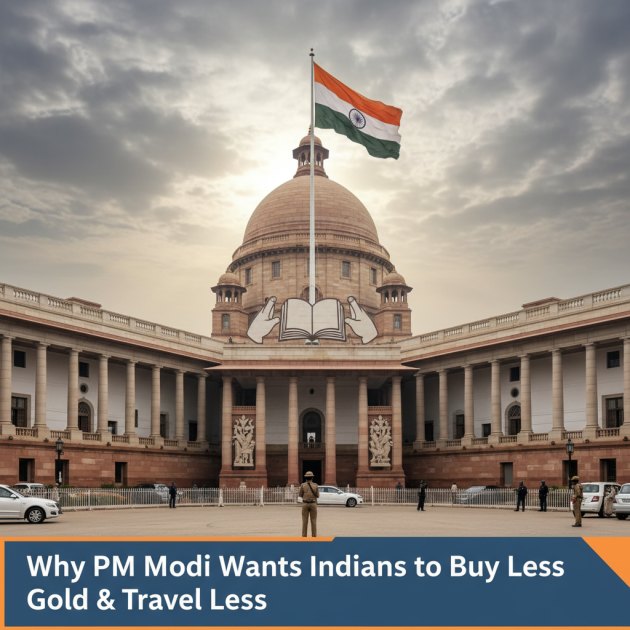
Why PM Modi Wants Indians to Buy Less Gold & Travel Less: A Deep Dive into India's Economic Future
May 16, 2026
Imagine this: You’re eyeing that beautiful gold necklace for your daughter’s wedding, or perhaps planning that dream international trip you’ve saved for years. It’s a common Indian aspiration, right? But what if I told you that Prime Minister Narendra Modi is subtly, yet firmly, nudging you – and millions like you – to reconsider these choices? It might sound counterintuitive, even a bit like asking you to curb your personal joys. However, understanding the rationale behind PM Modi's statements on gold consumption and foreign travel is crucial to grasping the bigger picture of India's economic trajectory. This isn't just about personal spending; it's about national prosperity. Let's unpack why this matters so much for your wallet and for India's future.
The Gold Standard Revisited: PM Modi's Policy and Your Investment
For generations, gold has been more than just an ornament in India. It’s a symbol of wealth, security, and cultural pride. We buy it for weddings, festivals, and as a hedge against inflation. India is, after all, one of the world's largest consumers of gold. But this deep-seated love for the yellow metal has a significant economic downside that PM Modi's government is increasingly highlighting. The core of the PM Modi gold policy isn't about demonizing gold itself, but about its economic impact when a vast amount of national wealth is locked up in a non-productive asset.
Why Gold Imports Drain Our Coffers
Here’s the hard truth: almost all the gold consumed in India is imported. Think about it – every gram of that glittering bangle or sovereign coin has to be bought from abroad, usually by spending precious foreign exchange. In the fiscal year 2023-24 alone, India imported gold worth over $30 billion (₹2.5 lakh crore approximately). This outflow of foreign currency weakens the Indian Rupee against other major currencies, making everything we import – from crude oil to electronics – more expensive. This, in turn, fuels inflation, directly impacting your household budget.
The Opportunity Cost: What Else Could That Money Do?
What most people miss is the concept of opportunity cost. That ₹50,000 you spent on a gold chain could have been invested in a mutual fund that potentially grows your wealth, or used to start a small business, or even put into a fixed deposit offering decent returns. When millions of Indians make similar choices, the collective impact is enormous. Instead of this capital circulating within the Indian economy, creating jobs and fostering growth, it flows out to international markets. The government's push, therefore, is to encourage investment in financial assets like stocks, bonds, and mutual funds, which not only offer better returns but also contribute to capital formation within India.
Government Initiatives: Making Financial Investments Attractive
You might have seen initiatives like Sovereign Gold Bonds (SGBs) and Gold Monetisation Schemes. These are designed to offer you the benefits of gold investment (like price appreciation) while keeping the capital within the country. SGBs, for instance, offer a small interest rate on top of the gold price movement and are held in demat form, eliminating storage risks. The government is also working to streamline the process of investing in mutual funds and the stock market, making them more accessible to the common man. The goal is to shift the perception of gold from a mere store of value to a more productive asset class when invested through these government-backed instruments.
Practical Takeaway: Before your next gold purchase, explore Sovereign Gold Bonds or other government-approved investment schemes. You might find better returns and contribute to India's economic strength.
Curbing the Wanderlust: India Foreign Travel Curbs and Economic Sense
The second major area where you’re seeing a subtle nudge is foreign travel. While international travel broadens horizons and is a well-deserved break for many, the sheer scale of Indians travelling abroad has become a significant economic concern. When you book that flight to Dubai, London, or Singapore, you are again spending your hard-earned Rupees in a foreign land. This adds to the foreign exchange outflow, similar to gold imports.
The \$15 Billion Question: Forex Outflow from Tourism
Estimates suggest that Indians spend upwards of $15 billion (₹1.25 lakh crore approximately) annually on international tourism. This is a substantial chunk of foreign exchange that could be better utilised. Think about it from a national perspective: this money could be used to import essential goods, fund infrastructure projects, or pay off foreign debt. The government’s stance isn't to ban foreign travel, but to encourage a more mindful approach. The emphasis is on promoting domestic tourism and exploring the incredible diversity India has to offer.
Boosting 'Incredible India': The Economic Multiplier Effect
What most people miss is the immense economic multiplier effect of domestic tourism. When you travel within India, your money is spent at Indian hotels, restaurants, on Indian airlines, and with Indian guides. This directly supports Indian businesses and creates jobs for our own people. The government’s push for 'Dekho Apna Desh' (See Your Own Country) aims to achieve precisely this. By showcasing India’s rich heritage, diverse landscapes, and vibrant cultures, they are trying to make domestic travel as appealing, if not more so, than international destinations. This not only saves foreign exchange but also fuels regional economies and preserves our cultural heritage.
Real-World Scenario: The Economic Ripple Effect
Consider a family from Mumbai planning a holiday. If they choose to visit Kerala instead of Switzerland, their flight ticket goes to an Indian airline. Their hotel stay benefits a Kerala-based hotelier. Their food expenses support local farmers and restaurants. Their souvenir shopping empowers local artisans. This entire chain of spending remains within India, creating a positive economic ripple effect. Contrast this with a trip abroad, where most of that spending leaves the country.
Practical Takeaway: Before booking your next vacation, explore domestic travel destinations. You might discover hidden gems in India and contribute significantly to our economy.
Modi Austerity Measures or Economic Prudence?
When we talk about PM Modi's statements on reducing gold consumption and foreign travel, it's often framed as 'austerity measures'. While there's an element of fiscal discipline, it's more accurately described as economic prudence. The government is encouraging citizens to make choices that benefit the national economy. This isn't about deprivation; it's about strategic financial behaviour.
Understanding the 'Why': Balancing Consumption and Investment
The underlying principle is to balance consumption with productive investment. While consumption drives demand, excessive spending on imported goods or services that don't generate domestic value can be detrimental. The government wants to channel consumer spending towards assets and services that strengthen India's economic base. This includes investing in businesses, infrastructure, and domestic tourism, all of which create jobs and wealth within India.
The Role of the Citizen in Nation Building
PM Modi often speaks about the collective responsibility of citizens in nation-building. Encouraging citizens to buy less gold and travel less abroad are ways to empower individuals to contribute to this larger goal. When your financial decisions align with national economic interests, you become an active participant in India's growth story. It’s about making informed choices that have a positive impact, not just on your personal finances, but on the country's overall economic health.
Comparison: Gold vs. Financial Assets & Domestic vs. Foreign Travel
| Aspect | Traditional Approach (Buying Gold/Foreign Travel) | Government's Preferred Approach (Financial Assets/Domestic Travel) |
|---|---|---|
| Economic Impact | Foreign exchange outflow, potential inflation, limited domestic job creation. | Capital formation within India, Rupee appreciation, significant domestic job creation, supports Indian businesses. |
| Investment Returns | Gold prices fluctuate; no regular income (except SGBs). | Potential for capital appreciation and regular income (dividends, interest) from financial assets. |
| National Benefit | Minimal direct benefit to India's productive economy. | Strengthens Indian economy, boosts GDP, enhances national self-reliance. |
| Personal Benefit | Perceived security, cultural significance, personal enjoyment. | Potential for wealth creation, financial security, unique travel experiences, supporting national pride. |
Practical Takeaway: View these suggestions not as restrictions, but as opportunities to invest wisely and explore the wonders of India, thereby contributing to national growth.
Impact on the Indian Economy: Your Role in Growth
The cumulative effect of millions of Indians making these small shifts in their spending habits can be transformative for the Indian economy. When foreign exchange reserves are conserved, India has more financial muscle to navigate global economic uncertainties, invest in critical infrastructure like roads and power, and support key industries. A stronger Rupee means cheaper imports for essential commodities, thus controlling inflation and improving the purchasing power of your salary.
From Importer to Exporter: A Shift in Paradigm
The ultimate goal for any developing nation is to move from being a net importer to a net exporter. By reducing reliance on imported gold and encouraging domestic spending, India is inching closer to this paradigm. The money saved from gold imports can be redirected towards manufacturing, R&D, and export promotion, making India a global manufacturing hub. Similarly, a robust domestic tourism sector can eventually become a significant foreign exchange earner through inbound tourism.
Financial Literacy and Empowerment
This push also indirectly promotes financial literacy. As citizens are encouraged to look beyond traditional assets like gold, they are compelled to learn about mutual funds, stocks, and other financial instruments. This increased financial awareness empowers individuals to make better investment decisions, leading to greater personal wealth creation and a more financially stable populace. Websites like the Securities and Exchange Board of India (SEBI) offer resources to help you understand these investments better.
Practical Takeaway: Educate yourself about different investment options available in India. Increased financial literacy benefits both you and the nation.
Addressing Common Doubts About PM Modi's Economic Stance
It’s natural to have questions. Let’s address some of the common ones:
FAQ 1: Is the government banning gold purchases?
No, there is no ban on gold purchases. The government's stance is about encouraging a shift towards more productive investments and highlighting the economic implications of high gold imports. Initiatives like Sovereign Gold Bonds are a testament to this, offering a way to invest in gold-linked assets while benefiting the economy.
FAQ 2: Does this mean we should never travel abroad?
Not at all. International travel is a personal choice and can be enriching. However, the government is encouraging a mindful approach, suggesting that domestic travel should be prioritized where possible. The focus is on balancing personal desires with national economic priorities.
FAQ 3: Are financial investments always safer than gold?
Risk is inherent in all investments. Gold is often seen as a safe-haven asset, but its price can be volatile. Financial investments like mutual funds and stocks carry market risks, but over the long term, they have historically offered better returns than gold and contribute to economic growth. Diversification across asset classes is key. It’s important to understand your risk appetite before investing. For more on this, you can refer to guides on the RBI website.
FAQ 4: How does buying less gold help the common man?
When India imports less gold, the Indian Rupee tends to strengthen, or at least stabilize. This means imports become cheaper, including essential goods like fuel and electronics, which helps control inflation. A stable economy with controlled inflation means your salary has more purchasing power, and your savings are better protected. Furthermore, the capital that would have gone into gold imports can be used for infrastructure and industrial development, creating more jobs and economic opportunities for everyone.
FAQ 5: What are some alternatives to buying physical gold?
Excellent alternatives include:
1. Sovereign Gold Bonds (SGBs): Issued by the RBI on behalf of the government, these offer interest and gold price appreciation.
2. Gold ETFs (Exchange Traded Funds): These trade on stock exchanges and track the price of gold.
3. Gold Mutual Funds: These invest in Gold ETFs or mining companies.
4. Digital Gold: Available through various apps, allowing you to buy small quantities of gold digitally.
These options typically offer better liquidity, safety, and often, additional returns compared to physical gold, while still allowing you to benefit from gold price movements. Remember to check the latest offerings and terms on official government portals.
Conclusion: Your Choices Shape India's Tomorrow
The narrative around PM Modi's statements on gold and foreign travel is not about restricting personal freedoms; it’s about fostering economic self-reliance and sustainable growth. By encouraging citizens to channel their wealth into productive investments and explore the incredible diversity within India, the government is aiming for a stronger, more prosperous nation. Your decision to invest in financial assets over physical gold, or to explore the breathtaking landscapes of India over foreign shores, might seem small individually. But collectively, these choices have the power to significantly boost the Indian economy, conserve precious foreign exchange, create jobs, and ultimately, build a brighter future for all of us.
So, the next time you think about that gold purchase or that international holiday, remember the bigger picture. Consider the impact of your choices. Embrace the opportunities to invest in India’s growth story and discover the wonders of 'Incredible India'. Your informed decisions today are the building blocks of a stronger India tomorrow.
Disclaimer: This article is for informational purposes only and does not constitute financial, investment, or travel advice. Please consult with qualified professionals before making any financial or travel decisions.