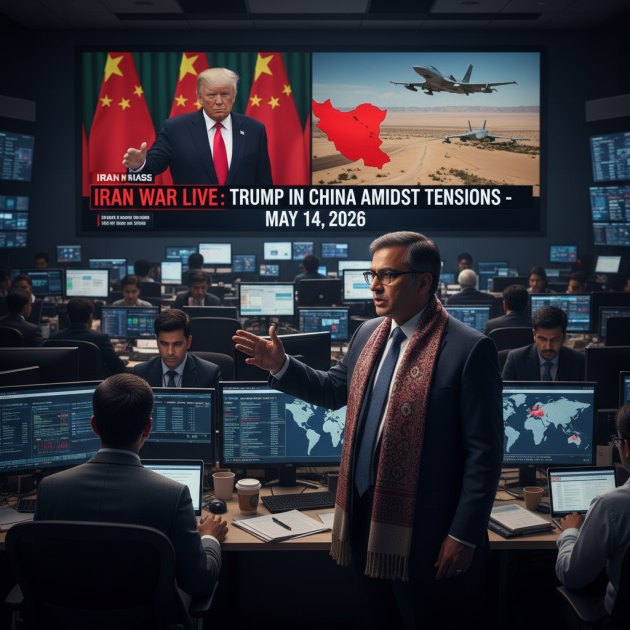
Iran War Live: Trump in China Amidst Global Tensions
Could a high-stakes diplomatic dance between Donald Trump and China's leadership in Beijing inadvertently become the backdrop to a rapidly escalating Iran war? As the world holds its breath on May 14, 2026, this is the chilling question on everyone's mind. The news of Trump's arrival in China, ostensibly for trade talks, now takes on an entirely new, urgent dimension. What happens in the Middle East, thousands of miles away, could very well be shaped by conversations happening right now in the opulent halls of Beijing. For you, as an Indian citizen, understanding these interconnected geopolitical shifts isn't just about staying informed; it's about grasping how global events can directly impact our economy, our security, and even our daily lives. This is more than just a headline; it's a potential turning point. We're diving deep into the Iran war live updates, the complex Trump-China dynamics, and what it all means for India. You need to know this.
Geopolitics Today: Iran War Live Updates and the Trump Factor
The situation in the Middle East has been simmering for months, but today, May 14, 2026, it appears to have reached a boiling point. Reports are flooding in of intensified military activity in the Strait of Hormuz, a critical chokepoint for global oil supplies. The ongoing conflict, which has seen proxy skirmishes and direct confrontations between Iran and a coalition of Western and regional powers, has raised fears of a full-blown regional war. The stakes couldn't be higher, with potential disruptions to oil prices, international trade, and the delicate balance of power in Asia and beyond.
What We Know So Far on the Iran War Front
Early reports indicate that several commercial vessels have experienced disruptions or attacks in the waters near Iran. While no nation has officially claimed responsibility, fingers are inevitably pointing towards escalating tensions between Iran and its adversaries. The Iranian Revolutionary Guard Corps (IRGC) has reportedly increased its naval presence, conducting drills that have been described as "provocative" by international observers. On the other side, the U.S. Navy and its allies have bolstered their presence in the region, increasing the risk of accidental escalation. You can imagine the tension on the ground – a single misstep could have catastrophic consequences.
Key Developments:
- Increased naval activity and reported incidents in the Strait of Hormuz.
- Heightened rhetoric from Iranian officials regarding regional security.
- Reinforcement of military assets by international powers in the Persian Gulf.
- Disruptions to oil tanker movements, causing initial price spikes.
The immediate impact you might feel is at the petrol pump. Global oil prices, which have been volatile, could surge dramatically if the Strait of Hormuz is significantly disrupted. This translates directly to higher fuel costs for your vehicle, increased prices for goods transported by road, and a ripple effect across the entire economy. For India, heavily reliant on oil imports, this is a critical concern.
Practical Takeaway: Keep an eye on global oil price indicators. While you can't control international events, understanding potential economic impacts can help you manage your personal finances better. Consider reviewing your budget for potential increased expenses in fuel and transportation.
Trump in China: Geopolitical Chess or Desperate Diplomacy?
Simultaneously, the world is watching Donald Trump's high-profile visit to Beijing. Officially, the agenda is economic – discussing trade imbalances and market access. However, in the current climate, it's impossible to ignore the elephant in the room: the escalating Iran war. China, a significant player in the Middle East and a major trading partner with Iran, holds considerable influence. Could Trump use this visit to pressure Beijing to play a more constructive role in de-escalating the Iran conflict? Or is this a strategic move by China to leverage the situation for its own economic and geopolitical gains?
The China-Iran Relationship: A Complex Web
China has historically maintained a delicate balance in its foreign policy, often advocating for non-interference while simultaneously pursuing its economic interests. Iran is a crucial energy supplier for China, and Beijing has been hesitant to alienate Tehran, especially amidst ongoing U.S. sanctions. However, China also recognizes the global economic fallout of a major Middle East conflict. The stability of global trade routes, including those passing through the Persian Gulf, is vital for China's own economic engine.
What most people miss is that China is also a permanent member of the UN Security Council. This gives it a significant diplomatic lever. If the situation in Iran deteriorates further, the international community, including the U.S., might look to China to exert its influence. Trump's presence in Beijing at this precise moment could be seen as an attempt to rally international consensus, or at the very least, to understand China's position and potential actions.
Scenario: Imagine Trump and Xi Jinping sitting down. Trump might argue that global stability, including uninterrupted oil flow, benefits everyone, including China. He could propose joint diplomatic efforts or at least a coordinated de-escalation strategy. China, on the other hand, might see this as an opportunity to extract concessions on trade or to position itself as a mediator, thereby enhancing its global standing.
Practical Takeaway: Pay attention to the joint statements or lack thereof from the Trump-China meetings. Any shift in tone or policy from Beijing regarding the Iran conflict, even subtle, could be a significant indicator of future geopolitical realignments.
Impact on India: Navigating Turbulent Geopolitics
For India, the implications of an Iran war and the dynamics of the Trump-China meeting are profound. Our nation's foreign policy is built on strategic autonomy, but we are not immune to global shocks. Here's how this could affect you:
Economic Repercussions for Your Wallet
As mentioned, oil prices are the most immediate concern. India imports over 80% of its crude oil, and a spike in global prices directly translates to higher costs for petrol, diesel, LPG, and aviation fuel. This impacts everything from your daily commute to the cost of goods and services. Furthermore, disruptions in the Middle East could affect remittances from Indians working in the region, a significant source of foreign exchange for India. You might also see fluctuations in the stock market as global investor sentiment turns cautious.
Strategic and Security Concerns
India has historically maintained strong ties with Iran, including significant investments in the Chabahar port. Any escalation of conflict could jeopardize these projects and India's strategic interests in the region. Moreover, instability in the Middle East can lead to increased refugee flows and pose security challenges. India's role in regional security dialogues will become even more critical. You want your government to navigate these complex waters with wisdom and foresight, ensuring India's national interests are protected.
Real-world example: Remember the tensions in 2019-2020 when incidents in the Persian Gulf led to temporary spikes in oil prices and heightened diplomatic activity? This situation could be far more severe. The Indian government would likely engage in robust diplomatic outreach to all parties involved, seeking de-escalation and ensuring the safety of Indian citizens and interests abroad.
Practical Takeaway: Stay informed through reliable Indian news sources. Understand the government's official statements and diplomatic initiatives. This will help you contextualize any economic or security-related news you encounter.
Diplomatic Efforts and the Path to Peace
Amidst the rising tensions, the question on everyone's mind is: what are the diplomatic channels being explored? The United Nations, key European powers, and regional actors are all reportedly engaged in quiet diplomacy. The challenge is immense. Rebuilding trust, addressing legitimate security concerns on all sides, and finding a sustainable solution requires immense political will.
The Role of International Organizations
The UN Secretary-General is likely working behind the scenes, attempting to broker dialogue. However, the effectiveness of international bodies can be hampered by the divisions among major powers, particularly the U.S. and China, and the U.S. and Russia. Your hope lies in these institutions finding common ground, however difficult.
Regional Players and Their Stakes
Countries like Saudi Arabia, the UAE, and Qatar are also deeply invested in regional stability. Their involvement in diplomatic efforts could be crucial. India, too, with its strategic location and economic ties, has a vested interest and potentially a role to play in facilitating dialogue. What we need are leaders willing to step back from the brink.
Comparison:
| Diplomatic Approach | Potential Outcome | Challenges |
|---|---|---|
| Direct Bilateral Talks (e.g., US-Iran) | Swift resolution, but difficult to achieve trust. | Deep-seated mistrust, preconditions. |
| Multilateral Negotiations (UN-led) | Broader consensus, but slower pace. | Veto powers, geopolitical rivalries. |
| Regional Dialogue (involving Gulf states) | Addresses local concerns, but may lack global leverage. | Internal regional rivalries. |
Practical Takeaway: Support initiatives that promote peace and dialogue. While individual actions might seem small, collective voices calling for diplomacy can influence public opinion and put pressure on leaders.
What This Means for Indians Globally and at Home
The interconnectedness of the world means that events like the Iran war, coupled with high-level diplomatic meetings like Trump's in China, have tangible effects on your life, whether you live in Mumbai, Delhi, or even abroad.
Protecting Your Finances in Uncertain Times
As discussed, economic volatility is a major risk. For your personal finances, this means thinking about diversification. If you have investments, ensure they are not overly concentrated in sectors highly sensitive to oil prices or geopolitical instability. Building an emergency fund becomes even more crucial. You might also consider hedging against inflation if you anticipate price rises.
Staying Safe If You Live or Work Abroad
For the millions of Indians working in the Middle East or with business interests in the region, the escalating Iran war poses direct security risks. It's vital to stay updated on advisories from the Indian Embassy or Consulate in your host country. Maintain contact with family and friends, keep essential documents handy, and be aware of your surroundings. Your safety is paramount.
Example: During previous periods of heightened tension, Indian embassies provided crucial support, including evacuation assistance when necessary. Staying informed through official channels is your first line of defense.
Practical Takeaway: For those with family or business ties to the Middle East, have a contingency plan. This could involve communication protocols, essential supplies, and awareness of local emergency services.
FAQ: Your Burning Questions on the Iran War and Trump-China Meet
Q1: Will this Iran war directly involve India?
A: While India is not a direct combatant, an escalation in the Iran war carries significant risks. These include economic fallout (oil prices, trade disruptions), security concerns for Indian citizens and assets in the region, and potential impacts on India's strategic interests, such as the Chabahar port. India's foreign policy aims to maintain strategic autonomy and avoid direct military entanglement, but the economic and security repercussions could be substantial.
Q2: How can Trump's visit to China affect the Iran situation?
A: China is a major global economic power and has significant diplomatic and economic ties with Iran. If Trump can persuade China to apply pressure on Iran for de-escalation, it could be highly impactful. Conversely, if China sees an opportunity to advance its own interests by mediating or by leveraging the situation, its actions will also shape the outcome. The dialogue between the two superpowers is a critical variable in the geopolitical equation.
Q3: What are the chances of a full-scale war?
A: The risk of a full-scale war is significant and appears to be increasing. The current situation involves direct military confrontations and heightened rhetoric. Miscalculation or accidental escalation remains a major concern. However, all parties involved, including Iran, the U.S., and major global powers like China, understand the catastrophic economic and human cost of a wider conflict. Diplomatic efforts are likely intensifying behind the scenes to prevent such an outcome, but the situation is extremely volatile.
Q4: How will this impact oil prices in India?
A: Any significant disruption to shipping in the Strait of Hormuz, a key route for crude oil, will almost certainly lead to a sharp increase in global oil prices. Given India's heavy reliance on oil imports, this will translate into higher prices for petrol, diesel, LPG, and other petroleum products. This could lead to inflation and impact the overall cost of living and doing business in India. You should brace for potential price hikes.
Q5: What can I do as an Indian citizen?
A: As an Indian citizen, your primary role is to stay informed through credible sources, understand the potential impacts on your personal finances and security, and support calls for peace and diplomatic solutions. For those with ties to the affected regions, prioritize safety and follow official advisories. Encourage responsible discourse and avoid spreading misinformation. Your informed awareness is crucial in navigating these complex times.
Conclusion: Navigating the Unpredictable Future
The confluence of escalating tensions in the Iran war and Donald Trump's high-stakes visit to China on May 14, 2026, presents a complex and potentially dangerous geopolitical landscape. For India, this is not a distant conflict; it's a situation with direct implications for your economy, security, and daily life. Understanding the nuances of the Iran war live updates, the strategic dance between the U.S. and China, and their potential impact on our nation is crucial.
We've explored the immediate risks, from surging oil prices to potential disruptions in trade and security. We've also looked at the diplomatic efforts underway and the vital role international players, including China and potentially India, might play. Your ability to navigate these uncertain times depends on staying informed, making prudent financial decisions, and advocating for peace and stability.
Your Next Steps:
- Stay Informed: Continue to follow reputable Indian news outlets for the latest updates on the Iran war and geopolitical developments.
- Financial Preparedness: Review your personal budget and investments. Consider how potential price hikes might affect you and plan accordingly.
- Advocate for Peace: Support diplomatic solutions and peaceful resolutions to international conflicts. Share reliable information and engage in constructive discussions.
- Connect with Official Sources: If you have family or business interests in the Middle East, stay connected with advisories from the Indian Ministry of External Affairs and your local embassy/consulate.
The world is watching. Let's ensure India is prepared, informed, and resilient. You have the power to understand and adapt. Let's face the future with knowledge and a commitment to peace.
Disclaimer: This article is for informational purposes only and does not constitute financial, legal, or security advice. Please consult with qualified professionals for personalized guidance.