India's Last Left-Wing Government Falls: What This Political Shift Means
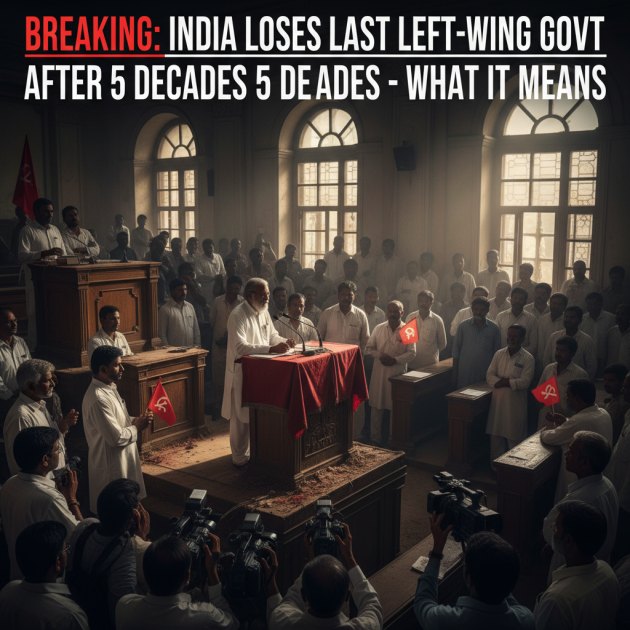
Imagine a political landscape where one color, one ideology, has been a constant for nearly half a century. Now, imagine that color fading, replaced by a new hue. This isn't just a metaphor; it's the reality India is waking up to. For the first time in over 50 years, the nation has witnessed the fall of its last bastion of left-wing governance. This seismic shift, reported by global media like Al Jazeera, isn't just a headline; it's a pivotal moment that will ripple through your daily life, impacting everything from your wallet to your future prospects. You might be wondering, 'What does this mean for me, for my family, for India?' Let's dive deep into this monumental political shift and unpack its profound implications.
The recent political developments mark the end of an era. The decline of the left-wing movement in India, once a dominant force, has been a gradual process, but its final governmental stronghold disappearing is a stark indicator of changing voter sentiments and evolving socio-economic priorities. This isn't about good or bad; it's about understanding a significant transformation and how you, as an engaged citizen, can navigate the new terrain.
The End of an Era: Tracing the Decline of India's Left-Wing Government
For decades, certain pockets of India have been synonymous with left-wing ideologies. These governments, often rooted in principles of socialism, worker's rights, and land reform, have shaped regional economies and social policies. However, the tide has been turning. Several factors have contributed to this gradual erosion:
- Economic Liberalization's Impact: Since the early 1990s, India's embrace of market-oriented reforms has gradually diminished the appeal of traditional socialist platforms for a significant portion of the electorate.
- Changing Demographics and Aspirations: A younger, aspirational India often looks towards rapid development, technological advancement, and global integration, which sometimes contrasts with the slower, more equitable growth models often associated with the left.
- Internal Party Challenges: Many left-wing parties have struggled with internal democracy, adapting to new political realities, and effectively communicating their relevance to a contemporary audience.
- Rise of Alternative Ideologies: The rise of nationalism and regional aspirations has also captured the political imagination, drawing voters away from traditional left-wing platforms.
The recent loss signifies that the last state that held onto this legacy has now transitioned. This isn't an overnight event but the culmination of trends observed over years, perhaps even decades. Think about how policies focused on agricultural subsidies or state-owned enterprises, once cornerstones, might be viewed differently by a generation seeking private sector jobs and digital connectivity.
A Look Back: The Historical Significance
The left has historically played a crucial role in India's post-independence narrative, championing causes like education, healthcare, and workers' rights. Their influence was felt strongly in various states, and their governments often implemented policies that aimed at equitable distribution of resources. For instance, land reforms in states like West Bengal, under left-led governments, were significant attempts to redistribute land ownership. However, the world has changed, and so have the challenges. The need for rapid infrastructure development, job creation in a globalized economy, and technological innovation has pushed political discourse in new directions.
Practical Takeaway: Understand that political ideologies evolve. While the core principles of the left might still resonate with many, their practical implementation in today's India faces new challenges and requires adaptation to remain relevant.
Economic Implications: What Does This Mean for Your Wallet?
This political shift signals potential changes in economic policy, and that's where it directly impacts your financial life. Governments often reflect their dominant ideology in their economic approach. What we might see are shifts in:
- Fiscal Policies: Expect a potential re-evaluation of subsidies, welfare programs, and public spending. While the left often advocates for robust social safety nets, governments leaning towards market-friendly policies might focus on fiscal consolidation, tax reforms aimed at boosting investment, and privatization of state-owned enterprises.
- Investment Climate: A move towards more market-oriented policies could attract more domestic and foreign investment, potentially leading to job creation and economic growth. However, this could also mean less emphasis on traditional labor protections or state intervention in industries.
- Consumer Prices and Affordability: Changes in subsidies for essential goods, energy, or public transport could affect your monthly budget. For example, if energy subsidies are reduced, your electricity and fuel bills might increase.
- Taxation: While broad tax reforms are always a possibility, a government focused on growth might introduce incentives for businesses and investors, which could indirectly affect the tax burden on individuals over time.
Consider this scenario: a state previously known for its extensive public sector employment might now see increased opportunities in private industries, requiring a different skill set. Your investment portfolio might also see shifts as sectors favored by market-friendly policies potentially outperform those historically supported by state patronage.
Policy Shifts to Watch For
Keep an eye on announcements regarding industrial policy, labor laws, and infrastructure development. For instance, a government might prioritize large-scale infrastructure projects, which can create jobs but also involve significant land acquisition and environmental considerations. Conversely, a focus on small and medium enterprises (SMEs) and entrepreneurship could lead to different kinds of economic activity and job opportunities.
Real-World Example: Imagine a state that historically offered significant land to farmers at subsidized rates. A new economic approach might shift focus towards encouraging private agricultural businesses, contract farming, or export-oriented produce, which could mean different opportunities and challenges for farmers.
Practical Takeaway: Stay informed about economic policy announcements. Understand how potential changes in taxation, subsidies, and investment policies could affect your personal finances, savings, and investment strategies. Diversify your financial planning to be resilient against potential shifts.
Social and Governance Implications: Your Rights and Welfare
Beyond economics, this political transition carries significant social and governance implications. The ethos of a government often shapes its approach to social justice, education, healthcare, and civil liberties. What could this mean for you?
- Welfare Programs: Programs like public distribution systems (PDS), healthcare initiatives (like Ayushman Bharat), and educational reforms might see adjustments. While the focus on welfare is likely to continue, the delivery mechanisms and the extent of state involvement could change.
- Labor Rights: The emphasis on labor rights and union power, often a strong point for left-wing governments, might be re-evaluated. New policies could aim to balance worker protections with business flexibility, which could be a double-edged sword for employees.
- Education and Healthcare Access: While universal access remains a goal, the model of delivery—whether primarily state-run or involving more private participation—could evolve. For instance, new policies might encourage public-private partnerships in running schools or hospitals.
- Civil Liberties and Dissent: The space for dissent and the relationship between the state and civil society organizations are often influenced by the ruling ideology. It's crucial to observe how the new governance model interacts with freedom of expression and the rights of citizens.
Think about the implications for your children's education. Will there be more private school options, or will the focus remain on strengthening public institutions? How will healthcare access change for your elderly parents? These are tangible questions that arise from such a significant political transition.
A New Governance Paradigm?
The shift could usher in a new governance paradigm that emphasizes efficiency, market mechanisms, and potentially a more centralized approach to development. This might streamline certain processes but could also raise concerns about equity and inclusivity. For instance, reforms aimed at making governance more efficient might involve digitizing services, which can be beneficial but also create a digital divide for those not tech-savvy.
Real-World Example: Consider a state that has traditionally had strong labor unions influencing policy. A government with a different economic philosophy might seek to reform labor laws to make them more 'business-friendly,' which could lead to fewer strikes but potentially weaker bargaining power for workers.
Practical Takeaway: Be aware of your rights as a citizen and as an employee. Understand how proposed policy changes might affect your access to essential services like education and healthcare, and your rights in the workplace. Engage with local representatives to voice your concerns.
The National Political Landscape: A Ripple Effect
The fall of the last left-wing government isn't an isolated event; it has profound implications for the national political landscape. It signifies a broader ideological realignment across India and could influence future electoral outcomes and national policy decisions.
- Consolidation of Power: This shift might lead to a more consolidated national political narrative, potentially strengthening the position of parties with more centrist or right-leaning ideologies.
- Emergence of New Coalitions: As traditional ideological lines blur, we might see the formation of new political alliances and coalitions based on regional interests or specific policy agendas rather than strict ideological adherence.
- Focus on Development vs. Ideology: The discourse might shift further towards tangible development metrics—GDP growth, infrastructure, and job creation—over purely ideological debates.
- Future of the Left: This event poses an existential question for the left in India. They will need to reinvent themselves, reconnect with the masses, and articulate a vision that resonates with the aspirations of modern India to regain political relevance.
You've likely seen the political discourse change over the years. This development suggests that the momentum towards a particular political direction is strengthening. It means the issues that dominate national debates might also evolve, focusing more on economic growth and national security, for example.
What Does This Mean for Your Vote?
As a voter, this transition compels you to re-evaluate your choices. Instead of solely relying on traditional party loyalties or ideological alignments, you might find yourself weighing candidates and parties based on their concrete development agendas, their economic plans, and their ability to deliver on promises of progress and prosperity.
Real-World Example: Imagine a national election where a party, previously on the fringes, gains significant traction by focusing on a 'development for all' agenda, irrespective of traditional left-right divides. This recent state-level shift could be a precursor to similar trends nationally.
Practical Takeaway: As a voter, educate yourself on the manifestos and track records of all political parties. Focus on their specific plans for economic growth, job creation, and social welfare, and how these align with your personal aspirations and community needs.
Navigating the Future: Opportunities and Challenges
This political transformation presents both opportunities and challenges for India. As the nation navigates this new phase, your role as an informed citizen becomes even more critical.
- Opportunities:
- Economic Growth: Market-friendly policies could spur faster economic growth, leading to more opportunities in burgeoning sectors.
- Innovation and Technology: A focus on modernization could accelerate technological adoption and innovation across industries.
- Global Integration: Enhanced integration with the global economy could bring in foreign investment and new markets.
- Challenges:
- Inequality: Rapid growth without adequate social safety nets could exacerbate income inequality.
- Job Displacement: Automation and privatization might lead to job displacement in certain traditional sectors.
- Social Cohesion: Balancing rapid development with the needs of all sections of society, especially marginalized communities, will be crucial.
Your ability to adapt will be key. Learning new skills, understanding market trends, and staying financially prudent will help you leverage the opportunities and mitigate the challenges that lie ahead.
Your Role as a Citizen
In this evolving landscape, your voice matters more than ever. Holding elected officials accountable, participating in civic discourse, and advocating for policies that promote inclusive growth and social justice are vital. Don't underestimate the power of community action and informed public opinion.
Practical Takeaway: Be proactive in your personal and professional development. Stay informed about national and regional policies, and actively participate in democratic processes to ensure that the future development path is inclusive and beneficial for all sections of society.
Frequently Asked Questions (FAQ)
Q1: What does it mean for India to lose its last left-wing government?
Answer: It signifies a major ideological shift in India's political landscape. For decades, left-wing governments have represented a specific set of policies focused on social justice, labor rights, and state intervention. Their disappearance from the governmental map suggests a broader national trend towards more market-oriented economic policies and potentially different social priorities. It marks the end of an era where left-wing governance had a significant, albeit diminishing, presence.
Q2: How will this political shift affect my job prospects?
Answer: This could lead to a mixed bag of effects. On one hand, a more pro-business environment might stimulate economic growth and create new jobs, especially in sectors favored by market-friendly policies and foreign investment. On the other hand, there might be less emphasis on traditional public sector jobs, and labor laws could be reformed, potentially impacting worker protections. Your job prospects might improve if you are in sectors aligned with new growth areas, but it's crucial to stay adaptable and consider skill development in emerging fields.
Q3: Will essential services like healthcare and education become more expensive?
Answer: It's possible, but not guaranteed. Governments often adjust their spending and policies based on their ideology. A shift away from extensive state intervention might mean increased private sector participation in healthcare and education. While this could lead to more choices and potentially better infrastructure in some private facilities, it might also increase costs for consumers if subsidies are reduced or if the focus shifts from universal state-provided services to market-driven ones. It's important to watch specific policy announcements regarding public spending and regulatory frameworks for these sectors.
Q4: What should I do with my investments now?
Answer: This is a time to review your investment strategy, not panic. A political shift towards market-oriented policies might favor sectors like infrastructure, manufacturing, technology, and finance. However, diversification remains key. Consult with a qualified financial advisor to assess how these potential economic policy changes align with your risk tolerance and long-term financial goals. Avoid making hasty decisions based on short-term political news. This is for informational purposes only, and professional financial advice is recommended.
Q5: What is the future of the left-wing movement in India after this?
Answer: This is a critical juncture for the left in India. They face the challenge of reinventing their ideology and strategy to remain relevant in a changing socio-economic and political climate. This might involve focusing on specific issues like environmental protection, social justice for marginalized communities, or advocating for stronger regulations in a liberalized economy. Their future will depend on their ability to connect with the aspirations of a new generation of voters and articulate a compelling vision for India's future that goes beyond traditional platforms.
Conclusion: Embracing the New Political Reality
The fall of India's last left-wing government is more than just a political headline; it's a profound signal of evolving national priorities and a testament to the dynamic nature of democracy. For you, this means navigating a landscape that is likely to be shaped by new economic philosophies, different governance approaches, and a potentially altered social contract. The era of dominant left-wing governance in India has drawn to a close, ushering in a period that promises significant economic reforms, potentially faster growth, but also demands vigilance regarding social equity and inclusivity.
As citizens, our responsibility now is to stay informed, engage critically, and actively participate in shaping the future. Understand the implications of these shifts for your finances, your career, and your community. Advocate for policies that ensure inclusive growth and protect the rights of all. The journey ahead will be defined by how well we adapt, innovate, and collectively strive for a progressive and equitable India. Your informed participation is not just a right; it's a necessity for steering the nation towards a brighter future.