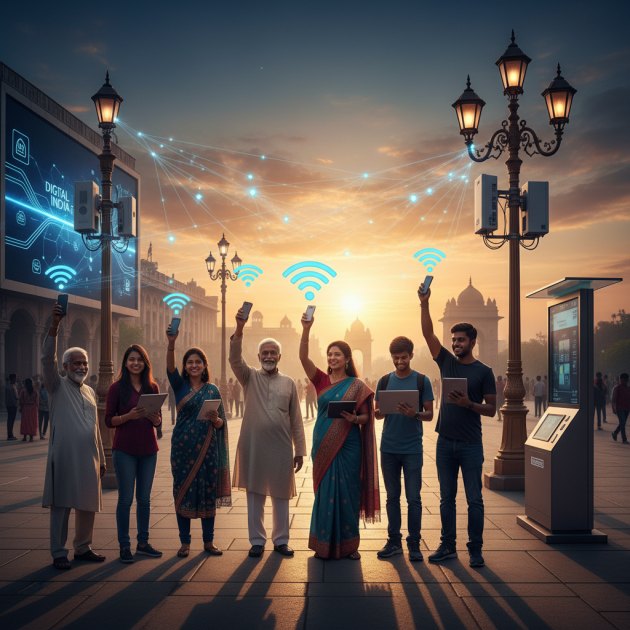
Digital India Wi-Fi Initiative: Free Public Access Simplified Today!
Imagine this: you’re at a bustling railway station, waiting for your train, and your phone battery is critically low, or you desperately need to check an important email before boarding. What if you could instantly connect to free, reliable Wi-Fi without jumping through hoops? Well, buckle up, because the Digital India Wi-Fi Initiative just made that a reality, and it’s simpler than ever before! In a move that’s set to transform how we connect, the government has streamlined access to public Wi-Fi hotspots across the nation. This isn't just an upgrade; it's a leap forward for digital inclusion, making the internet more accessible for millions of Indians. As of today, May 28, 2026, accessing public Wi-Fi is no longer a chore. Let’s dive into what this means for you and how you can benefit right away.
Digital India Wi-Fi: A Game Changer for Connectivity
The vision of Digital India has always been about empowering citizens with digital access. The Public Wi-Fi Access Network Interface (PM-WANI) framework, which underpins this initiative, has been a cornerstone in making this vision a reality. For years, we’ve seen Wi-Fi hotspots pop up, but often, the process of connecting was cumbersome, involving lengthy registration, OTPs that never arrived, or confusing authentication methods. This new simplification aims to break down those barriers. The core idea is to make public Wi-Fi as easy to access as turning on a light switch. This is particularly crucial for students, small business owners, daily commuters, and those in areas with limited home internet access. By reducing friction, the initiative ensures that more people can participate in the digital economy, access online education, and stay connected with loved ones.
The Evolution of Public Wi-Fi in India
Remember the early days? Public Wi-Fi was a luxury, often found only in high-end cafes or airports, and even then, it wasn't always free or fast. Then came initiatives like the one at railway stations, which, while a great start, often had a registration process. The PM-WANI framework, introduced earlier, aimed to decentralize Wi-Fi access by allowing Public Data Offices (PDOs) to provide Wi-Fi services. However, the user experience was still a work in progress. This latest update, effective today, focuses squarely on the end-user experience. It’s about removing the 'hassle' factor and ensuring that when you see a Digital India Wi-Fi sign, you know you can connect quickly and efficiently.
Practical Takeaway: The government’s focus on simplifying access means you can expect a smoother experience at public Wi-Fi hotspots. Keep an eye out for the official Digital India Wi-Fi branding.
How the New Digital India Wi-Fi Access Works
So, what has actually changed? The primary change is the simplification of the authentication process. Instead of multiple steps, the new system leverages a more streamlined approach, often requiring just a mobile number for verification through a one-time password (OTP). This is a significant improvement from the previous methods that sometimes demanded more personal information or complex sign-ups. The goal is to get you online within seconds, not minutes. Think of it like this: you walk into a designated Wi-Fi zone, your phone detects the network, you select it, enter your mobile number, receive an OTP, enter it, and voilà – you’re connected. This ease of access is critical for adoption. The faster you can connect, the more likely you are to use the service, whether it’s for a quick social media update, checking directions, or sending a work email.
The Role of Public Data Offices (PDOs)
The backbone of this network is the Public Data Office (PDO). These are the small shops, kirana stores, or even existing businesses that become Wi-Fi access points. The government, through the PM-WANI framework, has made it easier for these PDOs to set up and offer Wi-Fi services. The simplification today focuses on how these PDOs interact with users. The emphasis is on a standardized, user-friendly interface that minimizes the steps required for a customer to get online. This decentralization model is key to ensuring widespread coverage, especially in Tier 2 and Tier 3 cities and rural areas where traditional broadband penetration might be lower.
What You Need to Do
For you, the user, the process is remarkably simple. Ensure your device’s Wi-Fi is turned on. Look for networks named under the Digital India Wi-Fi initiative. When you select one, you’ll likely be prompted to enter your mobile number. You’ll receive an OTP on that number. Enter the OTP, and you should be connected. It’s that straightforward. Some locations might have slightly different interfaces, but the core principle of quick OTP-based authentication remains the same. This means less frustration and more time spent online.
Practical Takeaway: Always have your mobile phone handy when looking to connect to public Wi-Fi. The OTP system is your new best friend for quick access.
Benefits for Everyday Indians
The implications of this simplified Digital India Wi-Fi initiative are vast, touching the lives of everyday Indians in numerous ways. Let’s break down some of the most significant benefits:
Bridging the Digital Divide
This is perhaps the most crucial benefit. In a country where smartphone penetration is high but affordable data can still be a concern for many, free and easily accessible public Wi-Fi acts as a powerful tool to bridge the digital divide. It ensures that individuals who may not afford consistent mobile data plans can still access online resources, government services, educational content, and job opportunities. Think of a student in a small town who needs to download study materials for an exam, or a farmer who wants to check weather forecasts and market prices online. This initiative empowers them.
Boosting Economic Opportunities
For small businesses and entrepreneurs, reliable internet is no longer a luxury but a necessity. Whether it’s managing online orders, marketing products on social media, or communicating with suppliers and customers, internet access is key. Simplified public Wi-Fi means that shopkeepers, street vendors, and small service providers can stay connected without incurring significant costs. This can lead to increased sales, better business management, and ultimately, economic growth. For instance, a chaiwala in a busy market can now easily update his menu online or take orders through a food delivery app, reaching a wider customer base.
Enhancing Access to Government Services
Many government services are increasingly moving online, from applying for documents to accessing welfare schemes. Reliable public Wi-Fi ensures that citizens, especially those in remote or less affluent areas, can access these vital services without needing to travel long distances or incur data charges. This promotes greater citizen engagement and ensures that government initiatives reach the intended beneficiaries more effectively. Imagine applying for a ration card or checking your property tax status from a public Wi-Fi hotspot near your home.
Supporting Education and Skill Development
The digital classroom is here to stay. Students can now access online courses, research for projects, and participate in virtual learning sessions more easily. This is particularly beneficial for those preparing for competitive exams like UPSC or banking exams, where vast amounts of online resources are available. It democratizes access to knowledge and skill development opportunities, leveling the playing field for students from diverse socio-economic backgrounds.
Facilitating Communication and Information Access
In today’s world, staying connected is paramount. Whether it's video calling family members, staying updated with news, or simply browsing information, internet access is vital. Simplified public Wi-Fi ensures that even when you’re on the go, you can stay connected, reducing the burden on your mobile data and allowing for richer online interactions.
Practical Takeaway: Leverage these free Wi-Fi hotspots for tasks that consume a lot of data, like downloading educational apps, watching informative videos, or updating your professional profiles.
Addressing Common Concerns and Doubts
It’s natural to have questions when a new system is rolled out. Let’s address some common concerns you might have about the Digital India Wi-Fi initiative:
Is it truly free?
Yes, the core service provided through the PM-WANI framework and this simplified access initiative is intended to be free for the end-user. The model relies on a diverse ecosystem where various entities can provide Wi-Fi services. While some premium, high-speed services might eventually be offered at a cost, the basic access is designed to be free, especially in public utility areas like stations, bus stands, and government buildings.
Is it secure?
Security is always a concern with public Wi-Fi. The government emphasizes that while the access is simplified, basic security protocols are in place. However, it is crucial for users to exercise caution. Avoid accessing sensitive information like online banking or making financial transactions while connected to any public Wi-Fi network. Using a VPN (Virtual Private Network) is always recommended for enhanced security on public networks. The system ensures authentication via OTP, which adds a layer of verification, but it doesn't encrypt your data traffic by default.
What if I don't receive the OTP?
Network congestion or issues with your mobile service provider can sometimes delay or prevent OTP delivery. If you don’t receive it within a minute or two, try requesting it again. Ensure you have a stable network connection for your mobile number. If problems persist, you might need to contact the service provider at the specific location or try connecting later. The system is designed for reliability, but occasional glitches can occur.
How widespread is the coverage?
The initiative aims for extensive coverage across India. You’ll find these Wi-Fi hotspots in public places such as railway stations, bus terminals, government offices, educational institutions, and increasingly in local markets and community centers through the PDO model. The expansion is ongoing, and by 2026, the aim is to have a significant presence in most urban and semi-urban areas, with a steady rollout in rural regions.
What about data limits?
Typically, free public Wi-Fi services might have certain usage caps (e.g., a certain amount of data per day or session, or a time limit). The exact limits can vary depending on the location and the service provider. The simplified access ensures you get online quickly, and you’ll usually be informed about any limits once connected. For extensive usage, you might still need to consider your mobile data plan or look for paid options if available.
Practical Takeaway: Always be mindful of security when using public Wi-Fi. Avoid sensitive transactions and consider using a VPN for added protection.
Real-World Scenarios: How You Can Use This Today!
Let’s paint a picture of how this Digital India Wi-Fi initiative can seamlessly integrate into your daily life, starting right now:
Scenario 1: The Commuter’s Lifeline
You’re on your way to work, stuck in traffic, and need to send an urgent file to your boss. Instead of draining your mobile data, you pull over (safely!) or wait until you reach your office complex, which has a Digital India Wi-Fi hotspot. You connect in seconds, upload the file, and breathe a sigh of relief. Or perhaps you’re waiting at a bus stop and want to catch up on the news or listen to a podcast. Free Wi-Fi makes it possible without worrying about your data balance.
Scenario 2: The Student’s Study Buddy
A college student needs to download large research papers or watch online lectures for an upcoming exam. They head to the nearest public library or a designated hotspot in their locality. With the simplified access, they connect instantly, download all the required materials, and prepare for their exams without the financial strain of heavy data usage. This is a boon for students in areas where affordable, high-speed internet is scarce.
Scenario 3: The Small Business Owner’s Edge
Meena runs a small boutique in a local market. With the new Wi-Fi access, she can now easily update her shop's inventory on her e-commerce platform, respond to customer inquiries on WhatsApp Business, and post attractive product photos on Instagram, all from her shop. This enhances her visibility and customer engagement, directly impacting her sales.
Scenario 4: The Traveler’s Connectivity
You’ve just arrived at a new city's railway station and need to book a cab or check directions to your hotel. Instead of fumbling for a local SIM or relying on patchy mobile signal, you find a Digital India Wi-Fi hotspot. A quick OTP verification later, you’re connected, navigating your way with ease, and feeling less stressed about being in an unfamiliar place.
Practical Takeaway: Identify public places near you that are likely to have these Wi-Fi hotspots and plan your data-intensive tasks around them.
The Future of Digital India Wi-Fi by 2026
The current simplification is just the beginning. By 2026, the Digital India Wi-Fi initiative is poised to become even more integrated into our lives. We can expect several key developments:
- Wider Coverage: The network will expand significantly, reaching more Tier 3 cities, towns, and villages. The goal is to ensure that no citizen is left behind in the digital revolution.
- Improved Speeds and Reliability: As the infrastructure matures and more PDOs come online, the quality of service, including internet speed and connection stability, is expected to improve.
- Integration with Other Digital Services: Expect seamless integration with other government digital platforms, allowing for easier access to e-governance services directly through the Wi-Fi portal.
- Potential for Value-Added Services: While basic access will remain free, there might be opportunities for paid, premium services offering higher speeds or unlimited data, catering to specific user needs.
- Enhanced Security Measures: Continuous efforts will be made to bolster the security of the network, providing users with greater confidence.
The roadmap for 2026 indicates a strong commitment to making digital connectivity a fundamental right, accessible to all Indians. This initiative is a testament to the government’s ongoing efforts to build a digitally empowered nation.
Practical Takeaway: Stay updated on the expansion of the network in your area. The future promises even greater connectivity and digital access.
Frequently Asked Questions (FAQ)
- Q1: How do I find Digital India Wi-Fi hotspots near me?
-
Currently, the best way is to look for signage in public places like railway stations, bus stands, government offices, and popular market areas. As the network expands, there might be dedicated apps or web portals that map out available hotspots. Keep an eye on official Digital India communications for updates on discovery tools.
- Q2: Can I use this Wi-Fi for downloading large files or streaming movies?
-
You can certainly try! The availability of bandwidth and any potential data or time limits will determine how feasible this is. For large downloads or uninterrupted streaming, the performance might vary. It’s best suited for essential tasks, browsing, social media, and accessing online services. If you need high-bandwidth activities regularly, a dedicated home broadband or a robust mobile data plan might still be necessary.
- Q3: What happens if my OTP doesn't arrive, or the connection drops frequently?
-
If your OTP doesn't arrive, try requesting it again after a minute, ensuring your mobile signal is good. If the connection is unstable, it could be due to network congestion at that specific location or issues with the PDO's equipment. Try moving to a different spot within the coverage area or reconnecting after some time. For persistent issues, providing feedback to the service provider or through official channels can help improve the service.
- Q4: Is this initiative related to the BharatNet project?
-
Yes, indirectly. BharatNet aims to provide broadband connectivity to all Gram Panchayats. The Digital India Wi-Fi initiative, particularly through the PM-WANI framework and the expansion of public Wi-Fi, complements BharatNet by creating access points and last-mile connectivity solutions, ensuring that the broadband provided by BharatNet is accessible to the public in various forms.
- Q5: Are there any age restrictions to use the Digital India Wi-Fi?
-
While the system primarily uses a mobile number for verification, which implies the user should be of an age to possess a mobile connection (typically 18 years, or younger with parental consent/supervision), there are generally no explicit age restrictions for accessing the Wi-Fi itself. However, users are responsible for their online activities. Minors using public Wi-Fi should do so under parental guidance.
Conclusion: Get Connected, Get Empowered!
The Digital India Wi-Fi Initiative’s simplification of public access is a monumental step towards a more connected and inclusive India. As of today, May 28, 2026, you have a powerful, free, and easy-to-use tool at your fingertips to access the vast resources of the internet. Whether you’re a student, a professional, a business owner, or simply someone who needs to stay connected, this initiative is designed to benefit you directly. It’s about breaking down barriers, empowering citizens, and ensuring that the digital revolution reaches every corner of our nation. So, the next time you’re out and about, look for the Digital India Wi-Fi sign, connect with ease, and unlock a world of opportunities. Your digital journey just got a whole lot simpler and more accessible. Go ahead, get connected!